


 English
 русский
 Español
 عربى
 Français

2014
Establishment time
Introduction of Our Mango Puree&Pulp Processing Line:
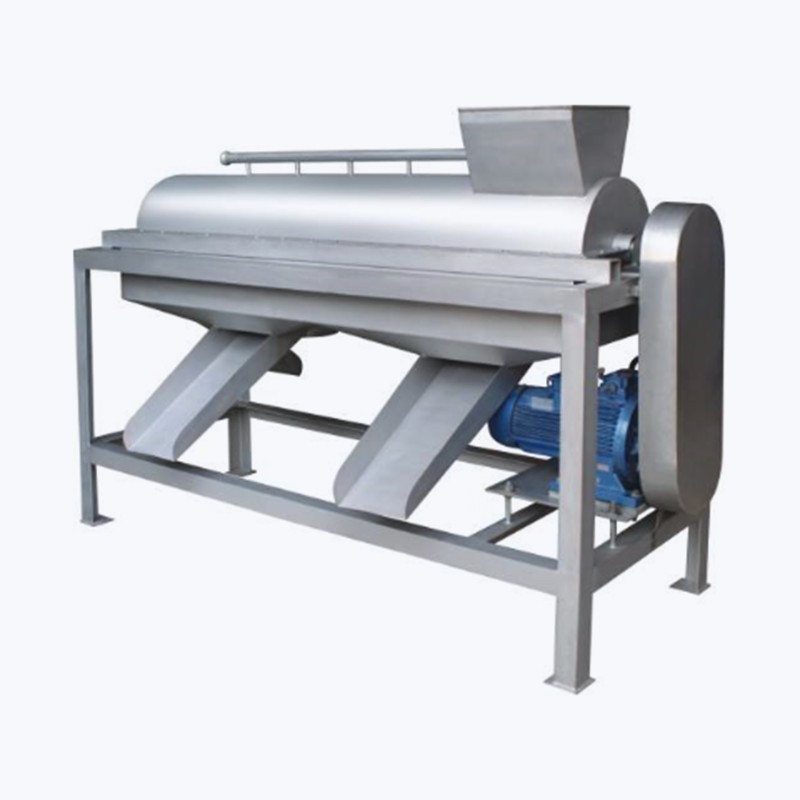
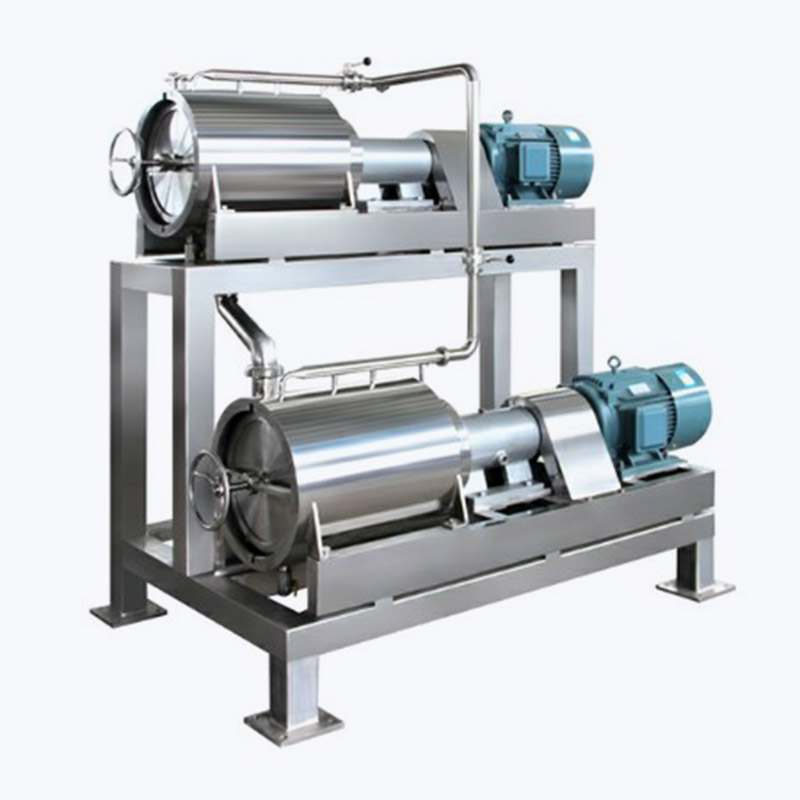
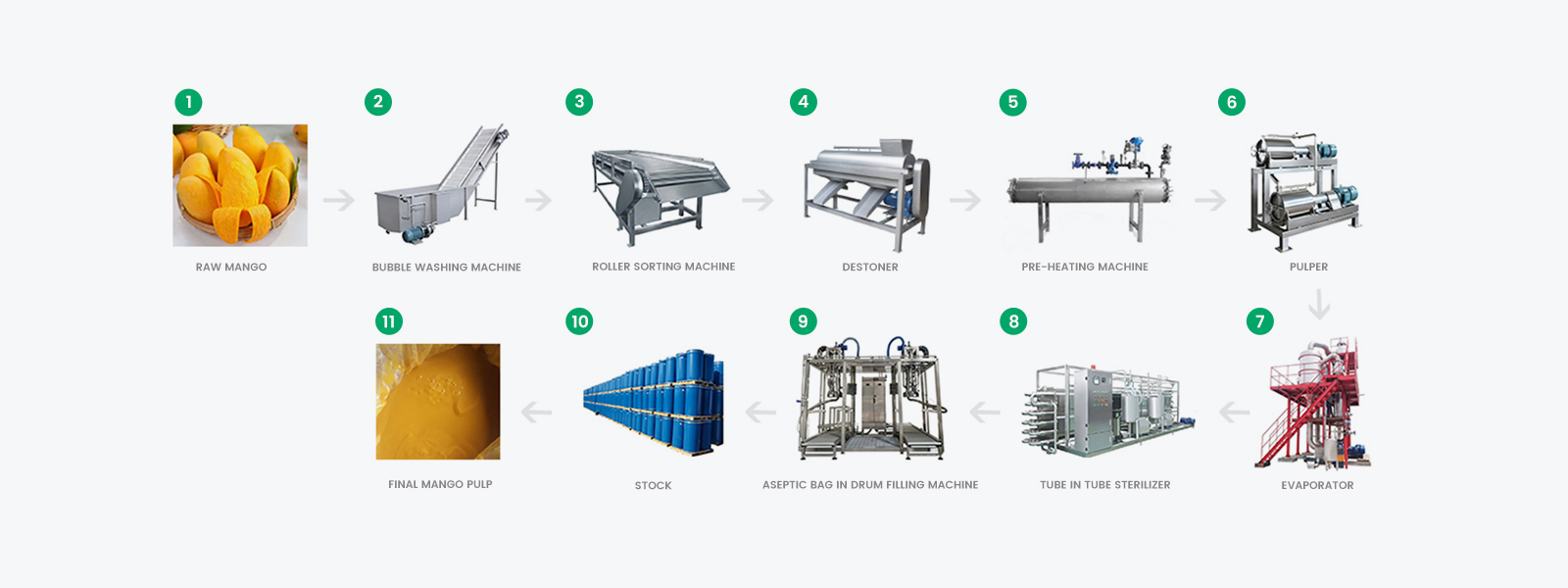
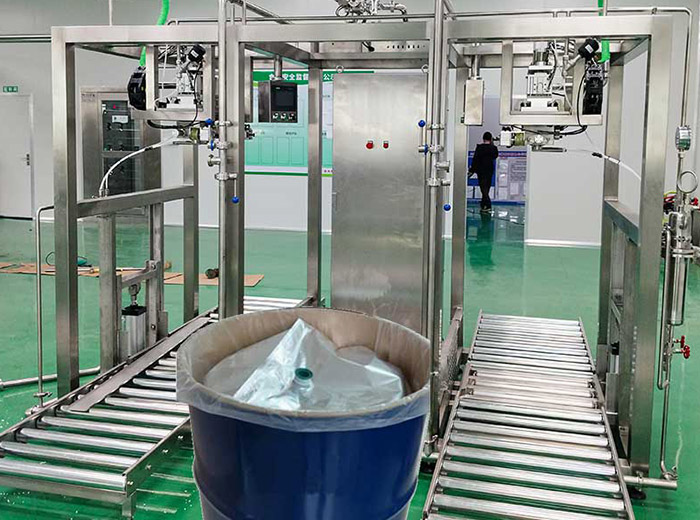
The mango pulp production line mainly includes washing machines, sorting machines, pitting machines, preheating machines, pulping machines, sterilization machines, and aseptic filling machines.
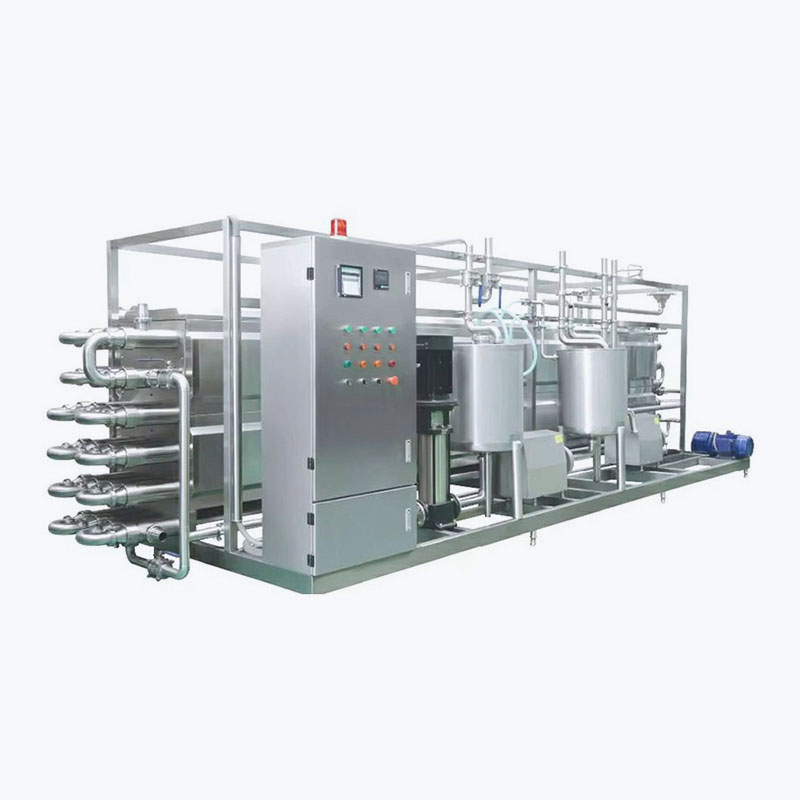
The entire production line is constructed of food-grade stainless steel, meeting hygiene standards, and equipped with a PLC intelligent control system for fully automated operation, significantly reducing labor costs. The processed mango pulp undergoes high-temperature instantaneous sterilization to ensure food safety, and then passes through an aseptic filling machine to maximize the preservation of the original fruit's flavor and nutrients.
Our equipment achieves high-quality mango pulp production at a controllable cost. We provide comprehensive turnkey engineering services, including design, production, installation, commissioning, training, and after-sales support etc.

| ITEM | SPECIFICATION |
| Major material | Mango |
| Minor ingredient | Vc, citric acid (adding during juice extraction) |
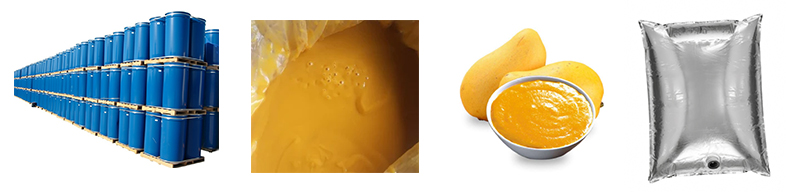
| Final product | Juice/puree/pulp |
| Final product package | Aseptic bag (5L-220L, 1000L) |
| Process capacity | 2~25tons/hr fresh fruits input |
| Budget | 200,000~2,500,000USD |
| Main characters | 1- Different juice extraction machine designed particularly upon different fruits so as to extract the juice efficiently at the maximum. |
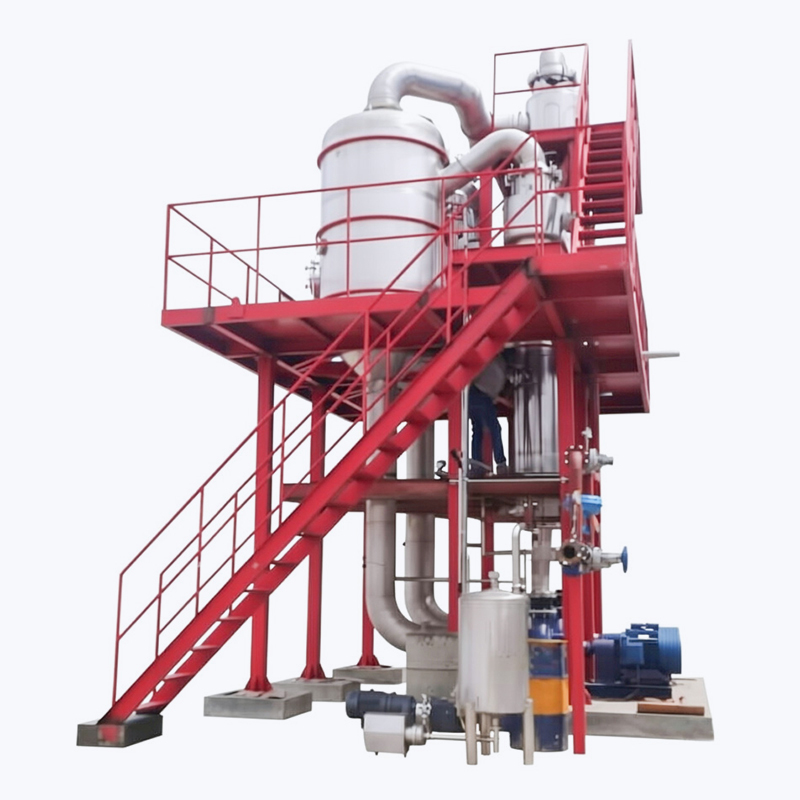
| 2- The nature flavor, color and nutrients can be retained at the maximum by means of multi-effect low temp falling film vacuum evaporation and UHT short time sterilization. | |
| 3- The UHT sterilizer and aseptic bag filler is incorporated Italian technologies and improved based on our rich experience, which can retain the fruits’ nature color, flavor and nutrition at the maximum. As well, our patented technology (the heat regeneration by the cold and hot product’s exchange) for sterilizer can save the energy over 30% than traditional. | |
| 4- The design of the process flow and the piping consider to retain the original natural flavor, aroma, color and nutrient at the maximum. For example, all the temp rising or dropping are finished in a very short time and short distance to avoid the flavor’s escaping or disruption during the heat treatment. | |
| 5- The optimal proposal is designed and customized upon the client’s project specified requirements and actual conditions based on the principle of “advanced process flow, simple structure equipment, reliable running and energy saved”. Meanwhile, we can design multi-fruit combined processing line as per the local resource available so as to maximum the equipment's using efficiency. | |
| 6- The PLC control system and main electric components from SIEMENS, SCHNEIDER or other reliable international brand to ensure the reliable and high auto running. |

 Germany
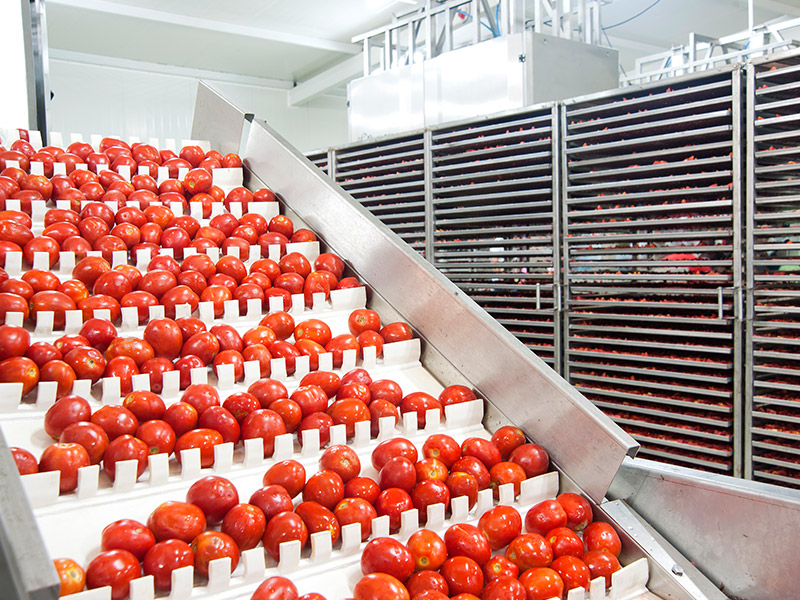
 Tomato Juice Project
Germany
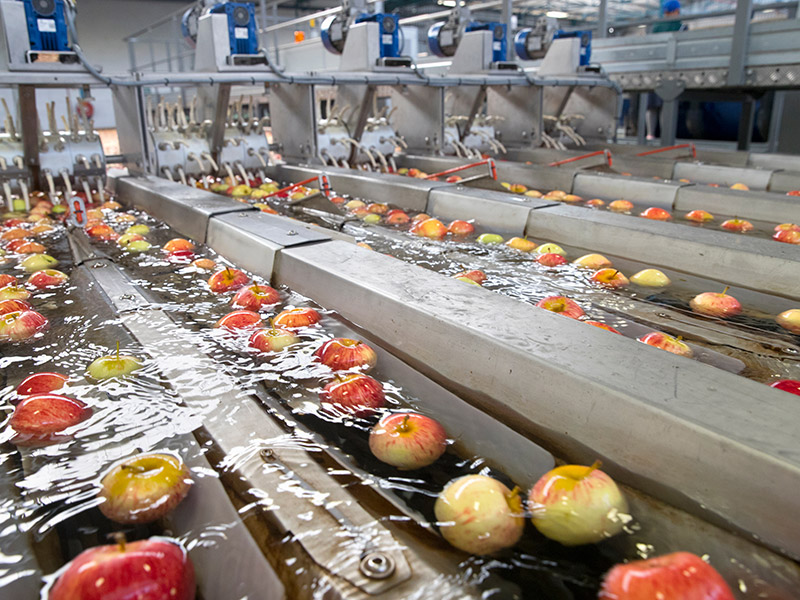
Apple Juice Project

America
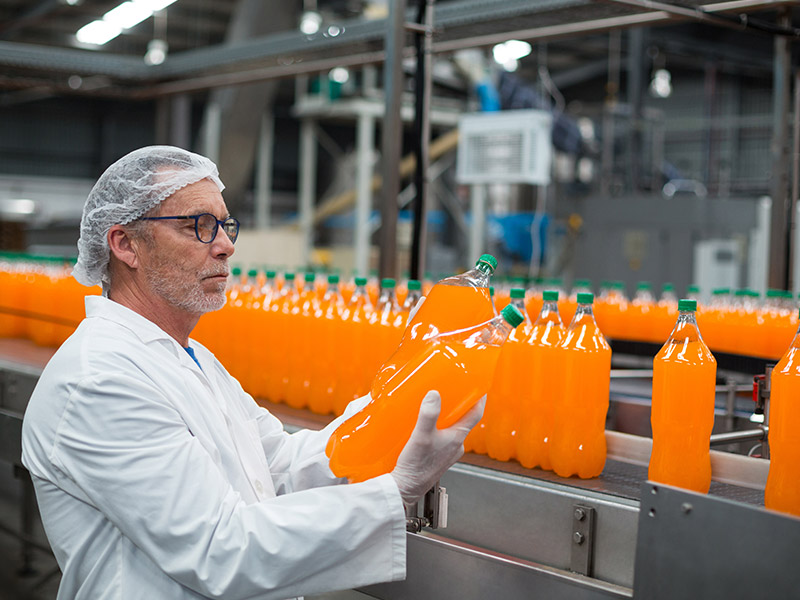
Orange Juice Project
America
Tomato Sauce Project

Italy
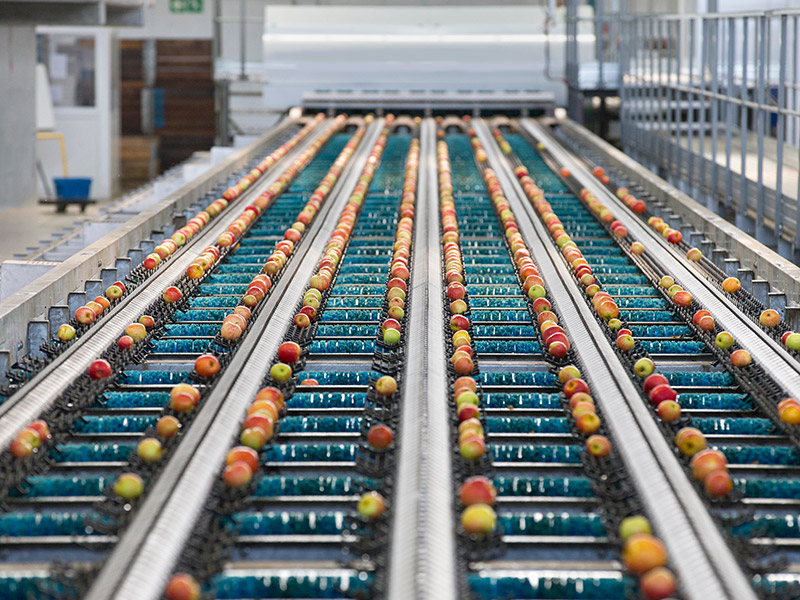
Apple Juice Project
Italy
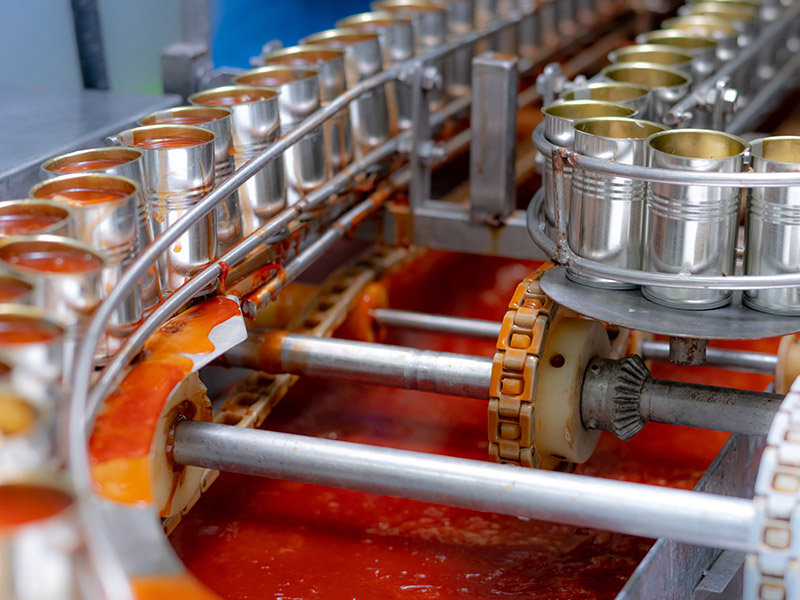
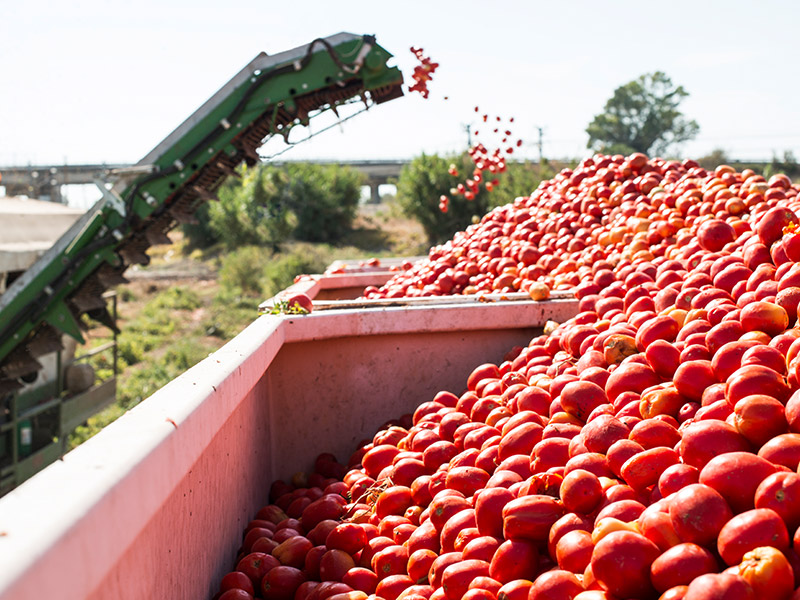
Tomato Juice Project
Through common questions, you can better understand the company's products, as well as the solutions to issues related to production and after-sales service.
Contact Us
About Us
Establishment time
Number of employees
Company area
Exporting country



Sunshine Machinery (Shanghai) Co., Ltd. designs and builds complete Mango Puree Processing Line manufacturer systems that take whole fresh mangoes through washing, sorting, destoning, preheating, pulping, concentration, UHT sterilization and aseptic filling. The line is engineered around the finished product first: whether you need single-strength pulp, clarified-style puree or a concentrate, the process flow, heat treatment and packaging format are set before equipment is selected.
Our standard range covers 2–25 t/h fresh fruit input, with aseptic bag formats from 5 L to 220 L and 1000 L. Every project is configured to the mango variety, ripeness window, target brix, viscosity and shelf-life requirement of the plant it serves. Buyers looking for a Mango Pulp Processing Line will find the same route here, with the pulper and finisher screens set for the pulp texture required.
The line is a continuous fruit-to-packed-puree system. Raw mangoes are received, washed and sorted, then destoned before the fruit is heated and pulped. The extracted puree is refined to the required texture, optionally concentrated, sterilized and filled aseptically. Each stage is sized from the same input figure so that capacity does not bottleneck at the pulper or the filler. Where a thinner, finer-screened product is wanted, the same sequence can be configured as a Mango Juice Processing Line by adjusting the refining stage and the evaporator duty.
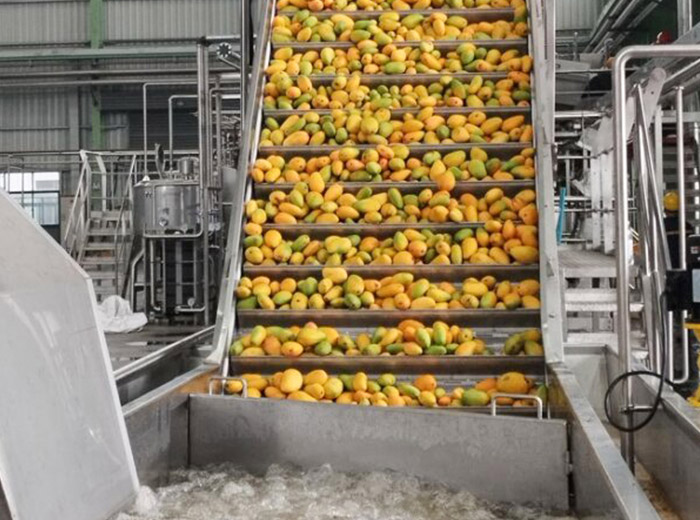
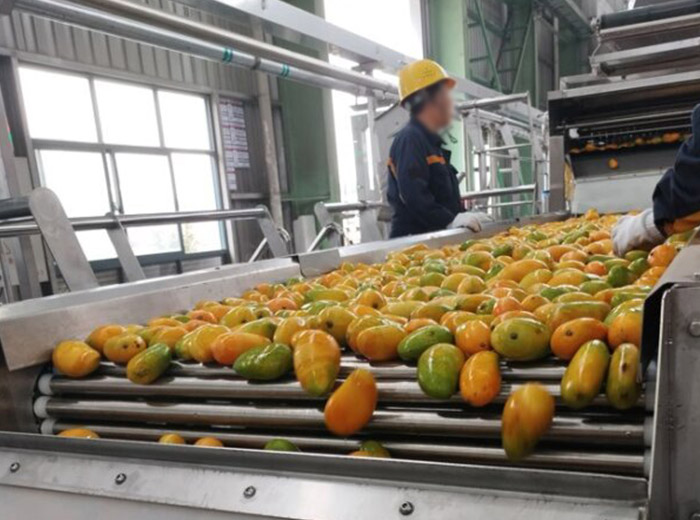
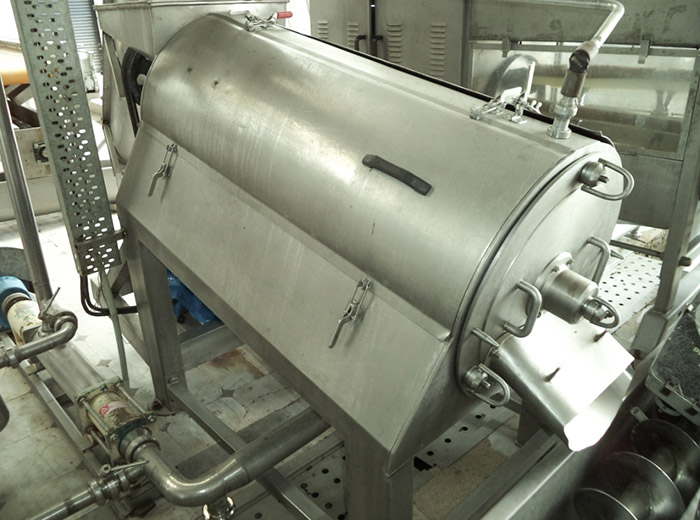
Bubble washing, roller sorting and destoning remove field soil, defective fruit and pits before any thermal treatment.
Preheating deactivates pectinase to limit browning; the pulper and finisher set pulp yield and particle size.
Multi-effect low-temperature vacuum evaporation and tube-in-tube UHT sterilization protect colour, aroma and nutrients.
Sterilized puree is filled into aseptic bags in drum or bag-in-box format for ambient storage and export.
The table below shows how each stage is configured and what it contributes to final puree quality. Equipment selection changes with fruit condition, target brix and packaging format, so the sequence is fixed while the machine specification is project-specific.
| Stage | Equipment | Function and Configuration Note |
|---|---|---|
| Washing | Bubble washing machine | Agitated water bath lifts soil and latex residue from the skin; residence time set to fruit load. |
| Sorting | Roller sorting table | Manual removal of rotten, unripe or damaged fruit before it reaches the pulper. |
| Destoning | Fruit destoner | Separates pits from flesh; screen and paddle geometry matched to mango size and fibre content. |
| Preheating | Preheater / scalder | Thermal deactivation of pectinase to control browning and protect pulp viscosity. |
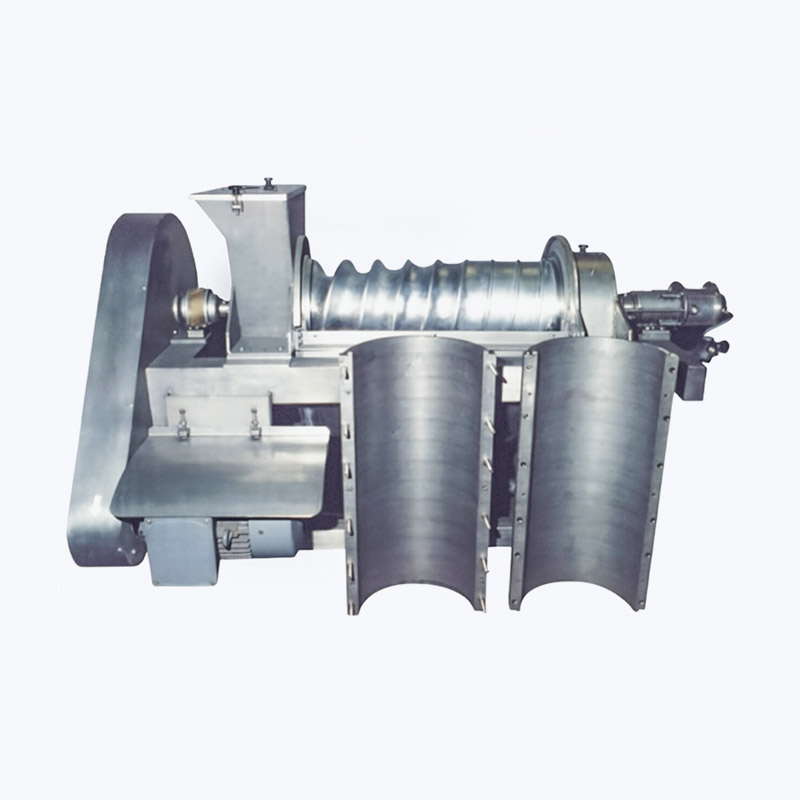
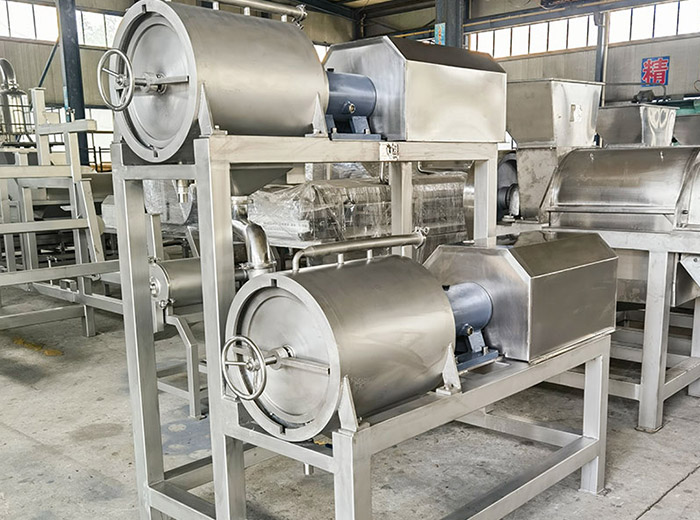
| Pulping | Fruit pulper and finisher | Extracts puree and refines texture; screen size chosen for smooth pulp or higher-fibre puree. |
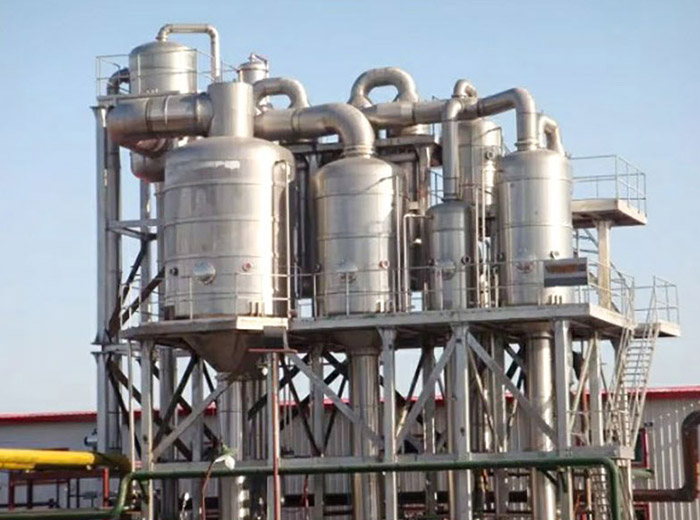
| Concentration | Vacuum evaporator | Multi-effect low-temperature evaporation for concentrate; omitted when single-strength puree is the product. |
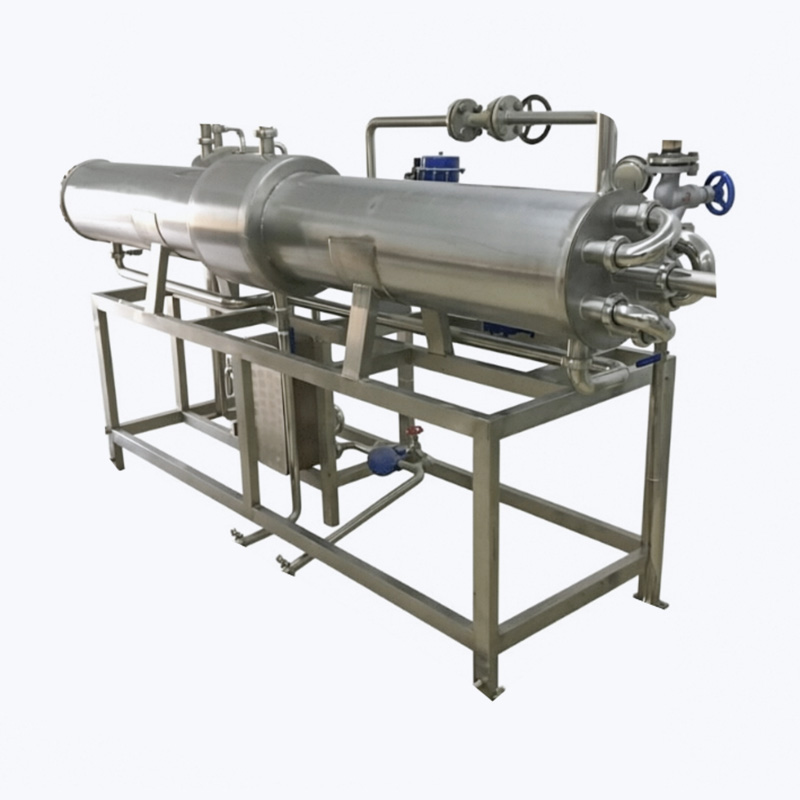
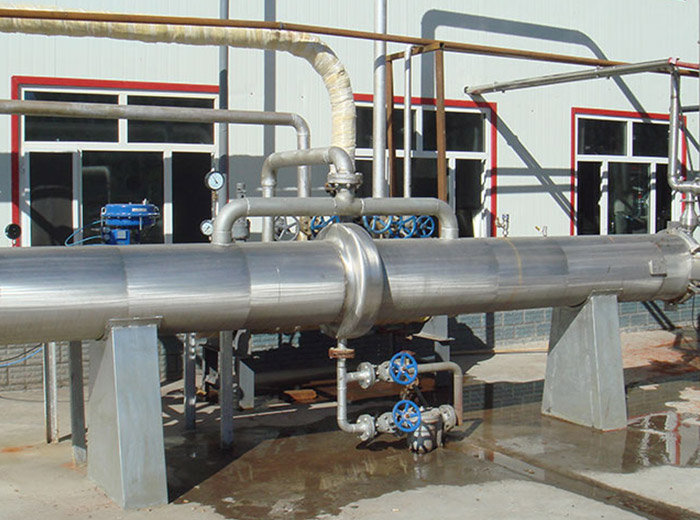
| Sterilization | Tube-in-tube sterilizer | UHT short-time treatment with heat regeneration between incoming and outgoing product. |
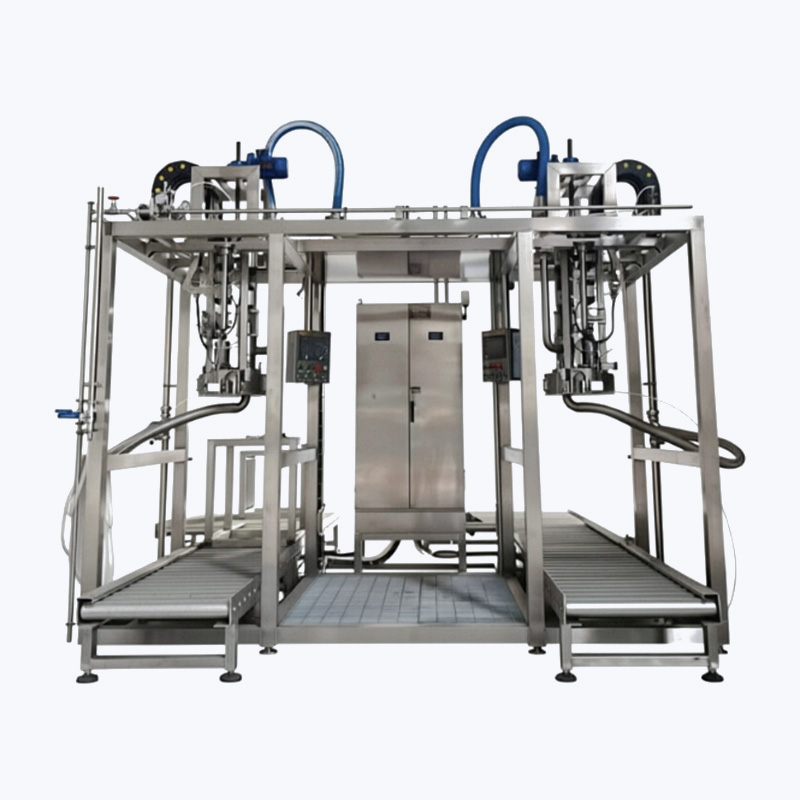
| Filling | Aseptic bag-in-drum filler | Fills 5–220 L and 1000 L aseptic bags under sterile conditions for ambient distribution. |
Capacity on a mango line is normally quoted as fresh fruit input, not finished puree output. The gap between the two depends on variety, ripeness, pit ratio and the extraction yield of the pulper, so we confirm both figures in the proposal rather than applying a single conversion factor.
All product-contact parts of the line are built in food-grade stainless steel, with piping and joints arranged to minimise dead legs and holding volume. The process layout keeps temperature rises and drops short in both time and distance, which limits aroma loss and flavour disruption during heat treatment.
Where the recipe requires it, ascorbic acid and citric acid can be dosed during extraction to support colour retention and acidity control. Dosing points, tank materials and cleaning connections are agreed at the design stage so that the additive system integrates with the existing process rather than being retrofitted later.
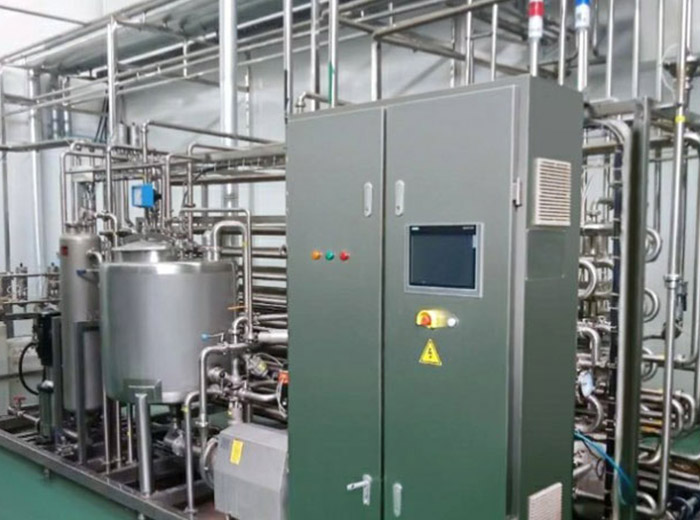
The line runs on a PLC control system with main electrical components from SIEMENS, SCHNEIDER or comparable international brands. Automation covers the sequence from washing through filling, with temperature, flow and level control at the critical points that affect sterility and product quality.
Mango is often one product in a multi-fruit factory. We design combined processing lines around the raw material available locally, including a Mango Juice Production Line that shares extraction and preservation equipment with mango puree, guava and other tropical fruit across the season. Comparable configurations are used in our guava puree and concentrate processing line and in stone-fruit projects such as the peach, apricot and plum puree processing line.
For plants that also pack juice or tomato products, the same aseptic filling and sterilization platforms are shared across product families, which simplifies spare parts and operator training.
Every machine undergoes a complete trial run and water debugging before dispatch, so performance and hygiene are verified before the equipment leaves the works. The line is then installed and commissioned on site, with the first production run used to confirm yield, brix and sterility parameters against the agreed specification.
Our engineers guide installation and commissioning on site and can remain for the initial production period to support the customer's operators. Maintenance support covers spare parts supply, scheduled inspections, remote diagnosis of faults and modernisation of older equipment.
Because mango seasons are short, we plan maintenance around the pre-season window: consumable parts, screen condition and sterilizer seals are checked before the first fruit arrives rather than during peak throughput.
A workable proposal depends on a small set of project inputs. Once these are known, we can fix the process flow, machine list, utility loads and layout.
| Input | Why It Matters |
|---|---|
| Mango variety and ripeness | Sets pulp yield, fibre behaviour and screen selection. |
| Target product and brix | Decides whether concentration is needed and at what duty. |
| Required output per hour | Sizes every stage from washing to filling. |
| Packaging format | Selects the aseptic filler and bag sizes. |
| Site layout and utilities | Drives plant layout, steam and power requirements. |
| Shelf-life and market requirement | Confirms sterilization parameters and filling conditions. |
Our standard mango line is configured for 2–25 t/h of fresh fruit input. Smaller pilot and laboratory-scale systems are also available for product development before a full industrial line is committed.
Yes. The evaporator is included when concentrate is required and bypassed when single-strength puree is being packed. The process flow and piping are designed so that switching between products does not compromise flavour retention.
Puree passes through a tube-in-tube UHT sterilizer with heat regeneration, then into an aseptic bag-in-drum or bag-in-box filler. Bags range from 5 L to 220 L, with 1000 L options for bulk export.
The line is constructed in food-grade stainless steel, with piping and fittings arranged to meet hygiene standards and to support effective cleaning between production runs.
We provide on-site installation guidance, commissioning and operator training, and can leave engineers on site during initial production. Annual pre-season visits support inspection, maintenance and technology upgrades.
Yes. We design multi-fruit lines around locally available raw material, so mango, guava and stone fruit can share extraction and preservation equipment across the season, improving overall equipment utilisation.

Copyright © Sunshine Machinery (Shanghai) Co., Ltd. All Rights Reserved Mango Pulp Processing Line Suppliers
