

 English
 русский
 Español
 عربى
 Français
Plum Puree Processing Line Manufacturers
Home / Products / Whole Production Line / Fruit/Veg. Process Line / Peach/Apricot /Plum Puree Processing Line
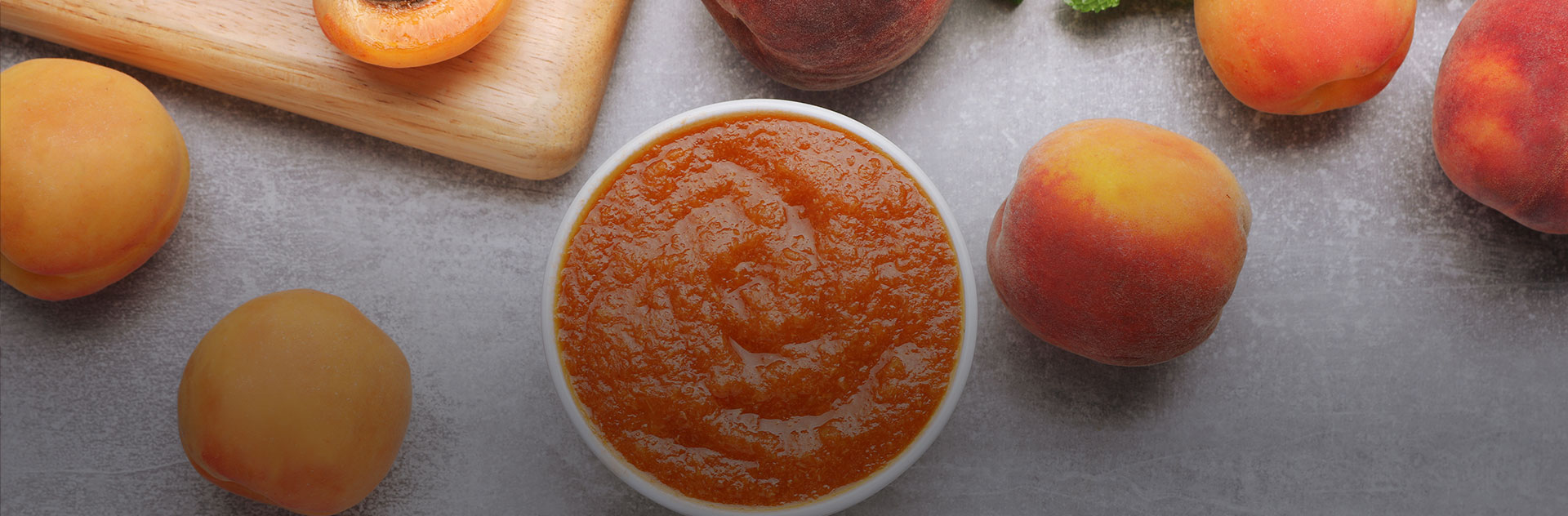
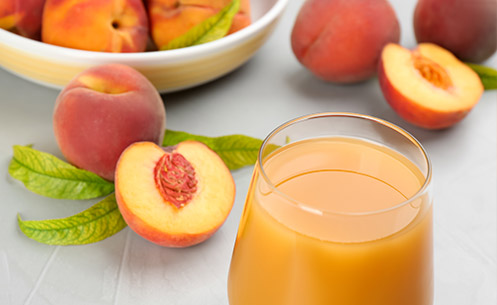
Introduction of Our Apricot /Plum/ Peach Puree Processing Line:
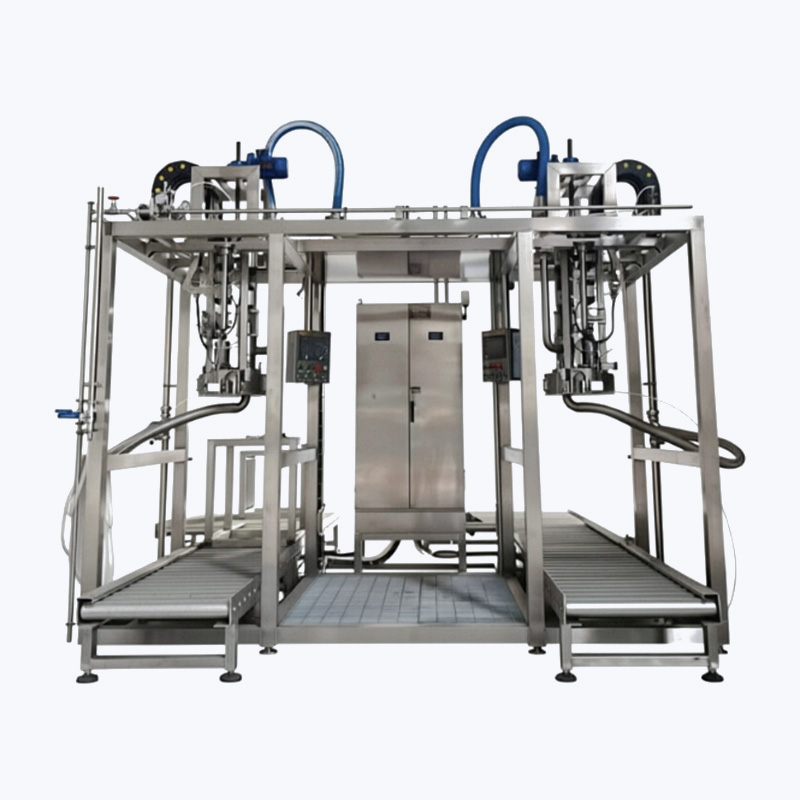
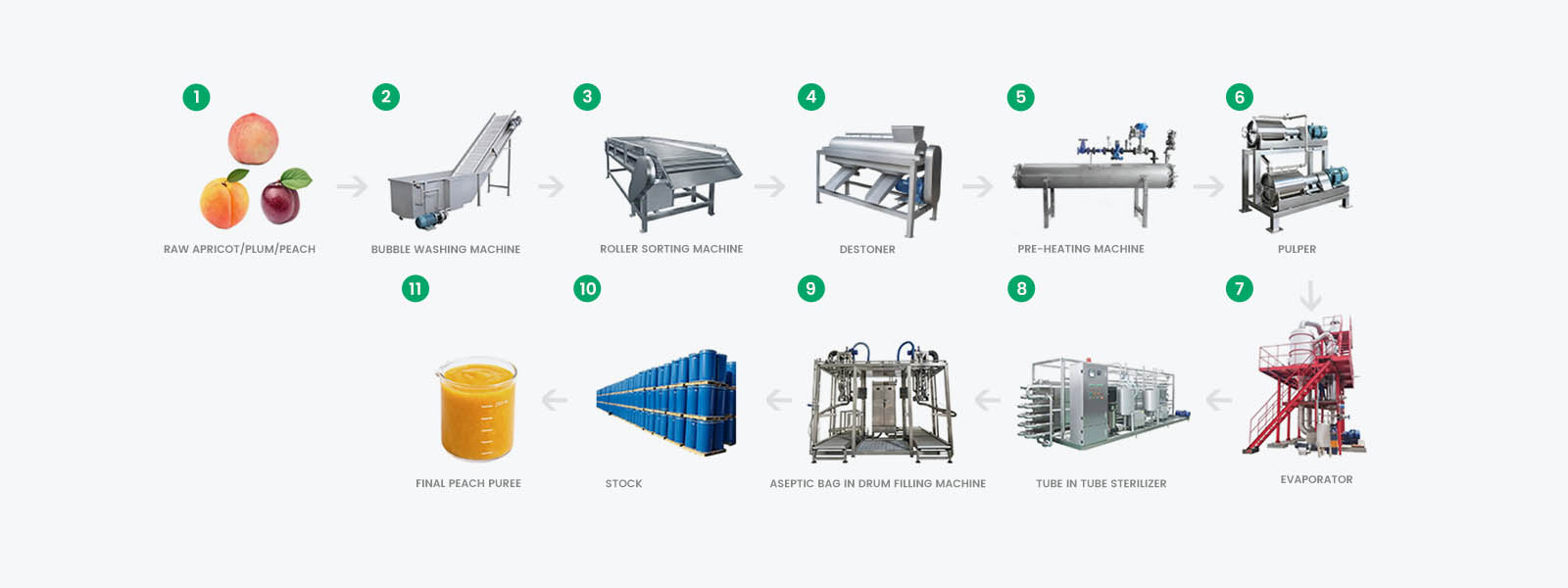
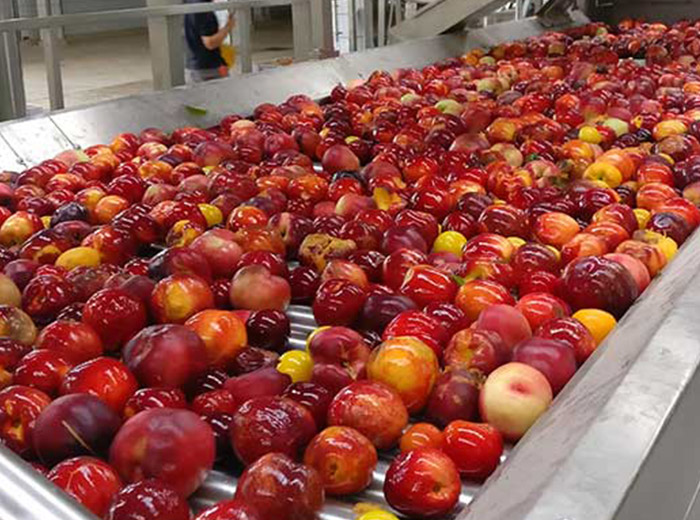
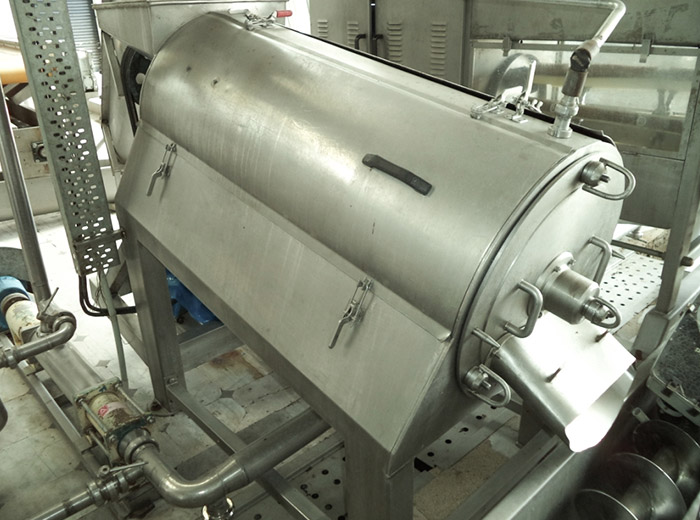
The apricot /plum/ peach puree processing line mainly includes washing machines, sorting machines, pitting machines, preheating machines, pulping machines, sterilization machines, and aseptic filling machines.
The entire production line is constructed of food-grade stainless steel, meeting hygiene standards, and equipped with a PLC intelligent control system for fully automated operation, significantly reducing labor costs. The processed apricot /plum/ peach puree undergoes high-temperature instantaneous sterilization to ensure food safety, and then passes through an aseptic filling machine to maximize the preservation of the original fruit's flavor and nutrients.
Our equipment achieves high-quality apricot /plum/ peach puree production at a controllable cost. We provide comprehensive turnkey engineering services, including design, production, installation, commissioning, training, and after-sales support etc.

| ITEM | SPECIFICATION |
| Major material | Apricot/Plum/Peach |
| Minor ingredient | Vc, citric acid (adding during juice extraction) |
| Final product | Juice/puree/pulp |
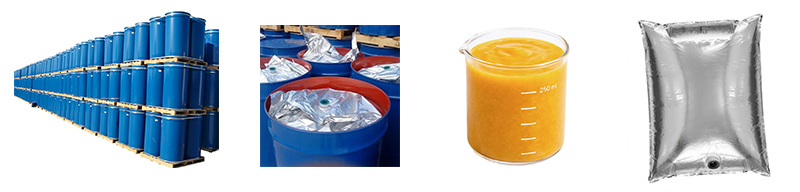
| Final product package | Aseptic bag (5L-220L, 1000L) |
| Process capacity | 2~25tons/hr fresh fruits input |
| Budget | 200,000~2,500,000USD |
| Main characters | 1- Different juice extraction machine designed particularly upon different fruits so as to extract the juice efficiently at the maximum. |
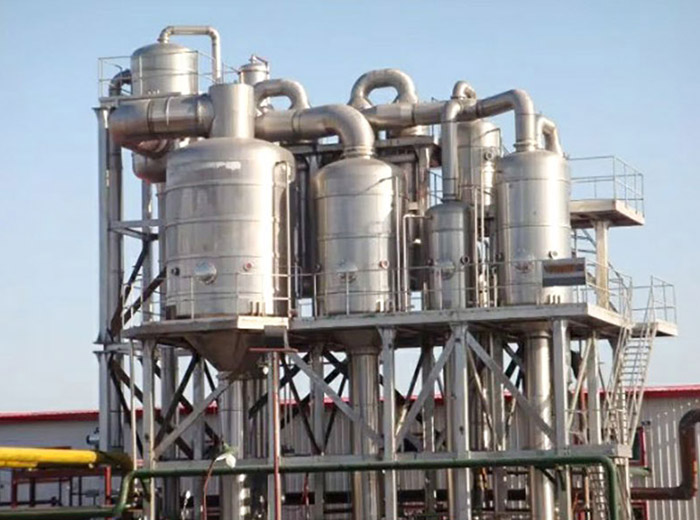
| 2- The nature flavor, color and nutrients can be retained at the maximum by means of multi-effect low temp falling film vacuum evaporation and UHT short time sterilization. | |
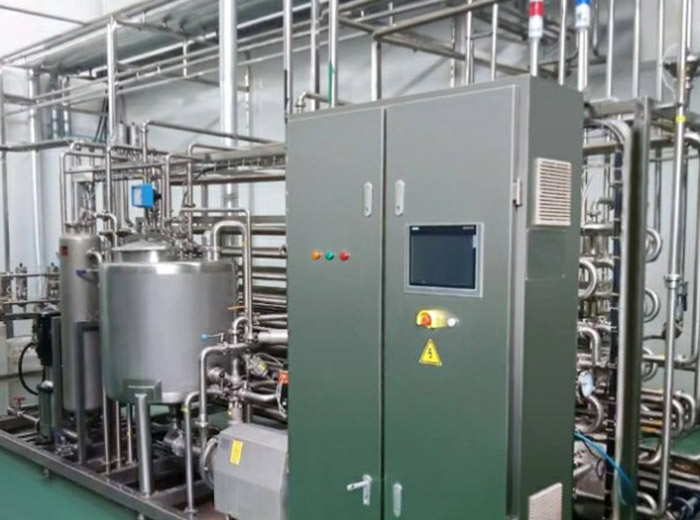
| 3- The UHT sterilizer and aseptic bag filler is incorporated Italian technologies and improved based on our rich experience, which can retain the fruits’ nature color, flavor and nutrition at the maximum. As well, our patented technology (the heat regeneration by the cold and hot product’s exchange) for sterilizer can save the energy over 30% than traditional. | |
| 4- The design of the process flow and the piping consider to retain the original natural flavor, aroma, color and nutrient at the maximum. For example, all the temp rising or dropping are finished in a very short time and short distance to avoid the flavor’s escaping or disruption during the heat treatment. | |
| 5- The optimal proposal is designed and customized upon the client’s project specified requirements and actual conditions based on the principle of “advanced process flow, simple structure equipment, reliable running and energy saved”. Meanwhile, we can design multi-fruit combined processing line as per the local resource available so as to maximum the equipment's using efficiency. | |
| 6- The PLC control system and main electric components from SIEMENS, SCHNEIDER or other reliable international brand to ensure the reliable and high auto running. |

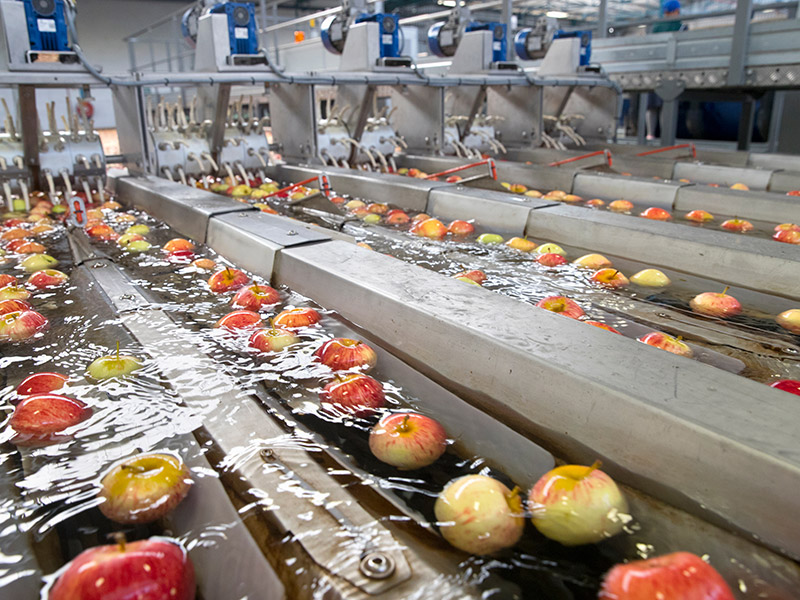
 Germany
 Tomato Juice Project
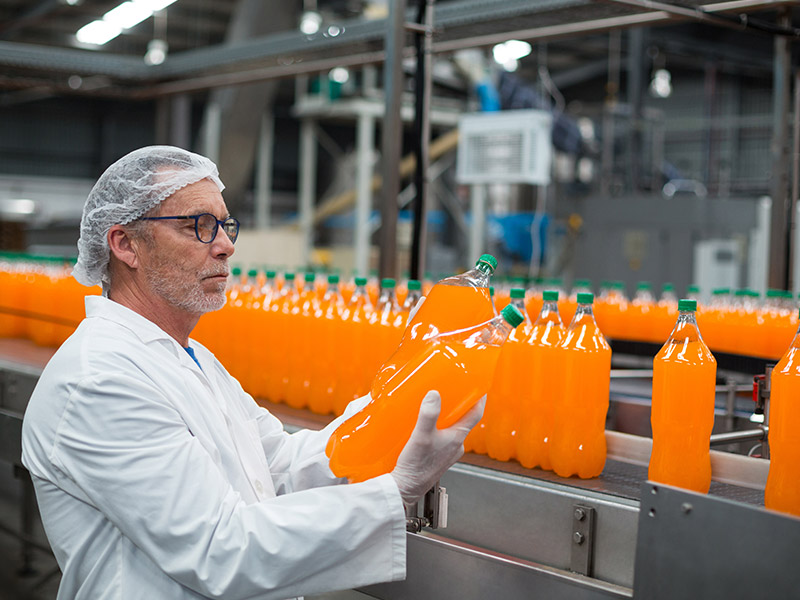
Germany
Apple Juice Project

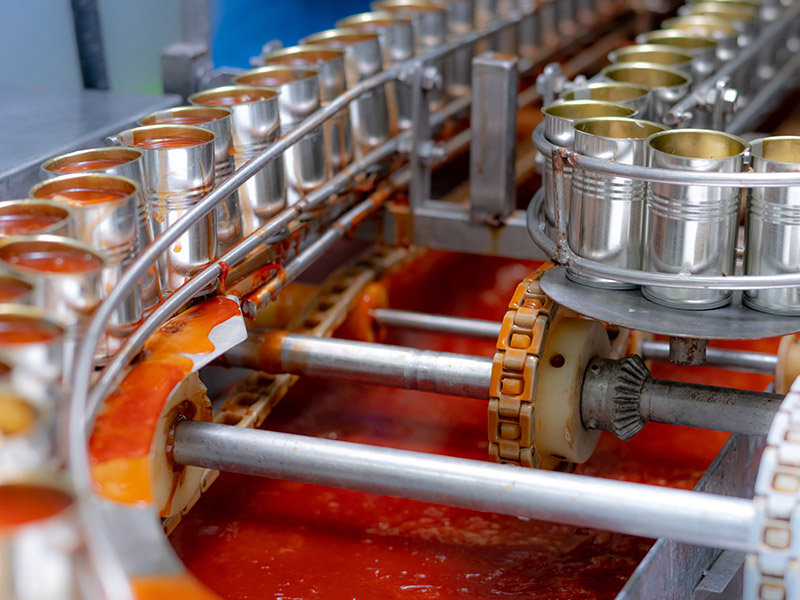
America
Orange Juice Project
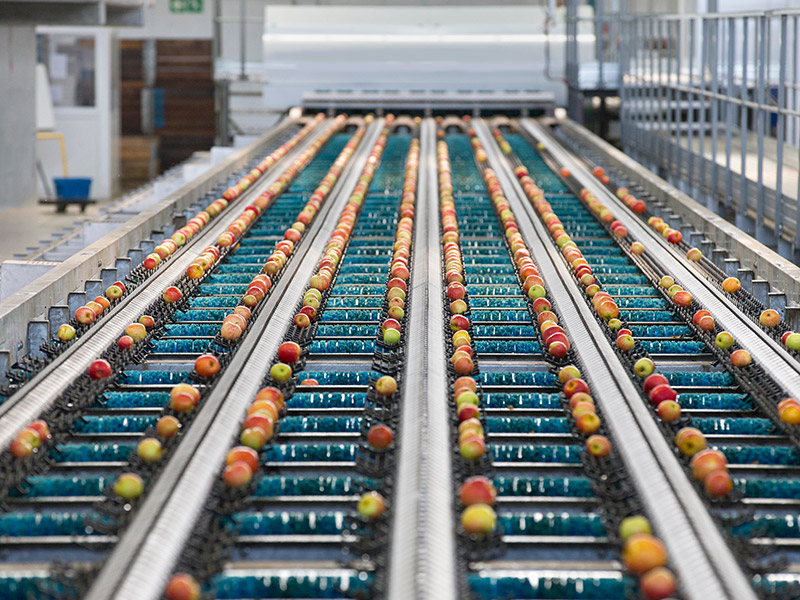
America
Tomato Sauce Project

Italy
Apple Juice Project
Italy
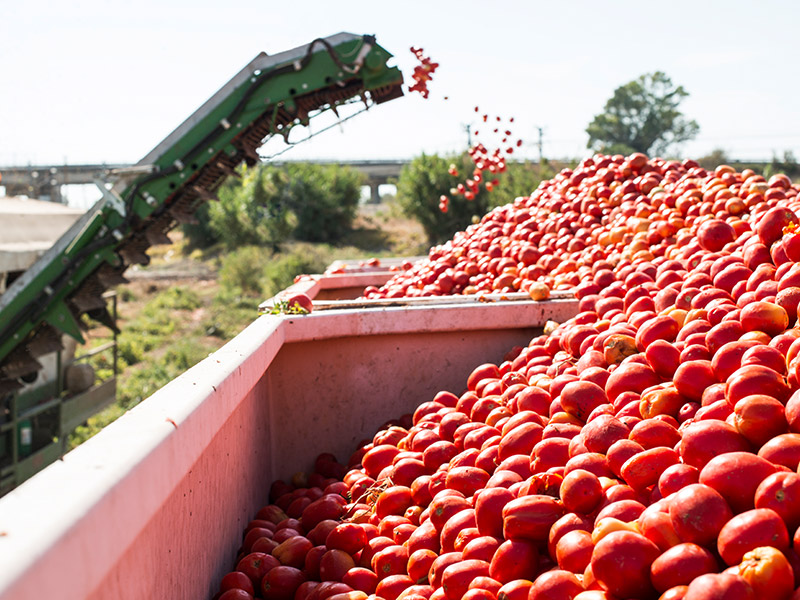
Tomato Juice Project
Through common questions, you can better understand the company's products, as well as the solutions to issues related to production and after-sales service.
Contact Us
About Us
Establishment time
Number of employees
Company area
Exporting country



Sunshine Machinery (Shanghai) Co., Ltd. designs, manufactures and commissions complete Peach/Apricot /Plum Puree Production Line manufacturer systems that take fresh stone fruit from the receiving bin through washing, sorting, destoning, preheating, pulping, concentration, UHT sterilization and aseptic filling. The line is built for processors producing NFC puree, concentrated puree and pulp for beverage, dairy, bakery and baby-food customers, with fresh-fruit intake typically between 2 and 25 t/h.
Every project starts from the finished product: brix, viscosity, colour target, pack format and shelf-life requirement. From that working point we set the process flow, select the destoner and pulper screens, size the evaporator and sterilizer, and match the aseptic filler to the bag or drum format.
The sequence below is the standard configuration. Stages can be added, bypassed or duplicated depending on fruit condition and the final product specification.
| Stage | Equipment | Process Purpose |
|---|---|---|
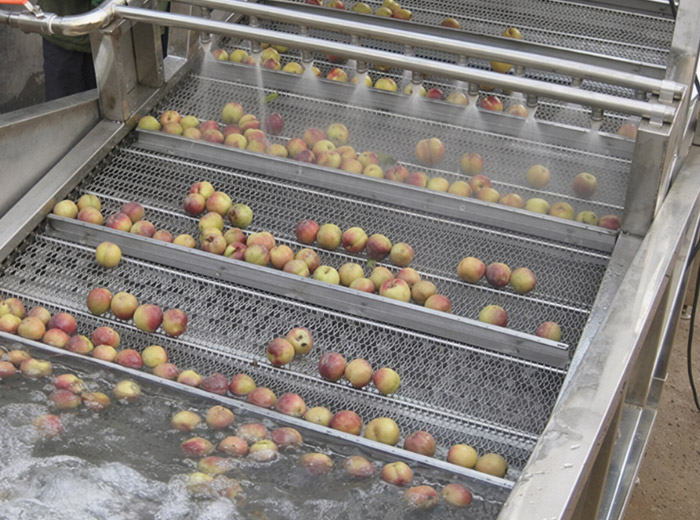
| 1. Receiving | Elevator and bubble washer | Removes field soil, leaves and surface residue with turbulent water and air agitation. |
| 2. Inspection | Roller sorting table | Operators remove rotten, bruised and unripe fruit before it reaches the destoner. |
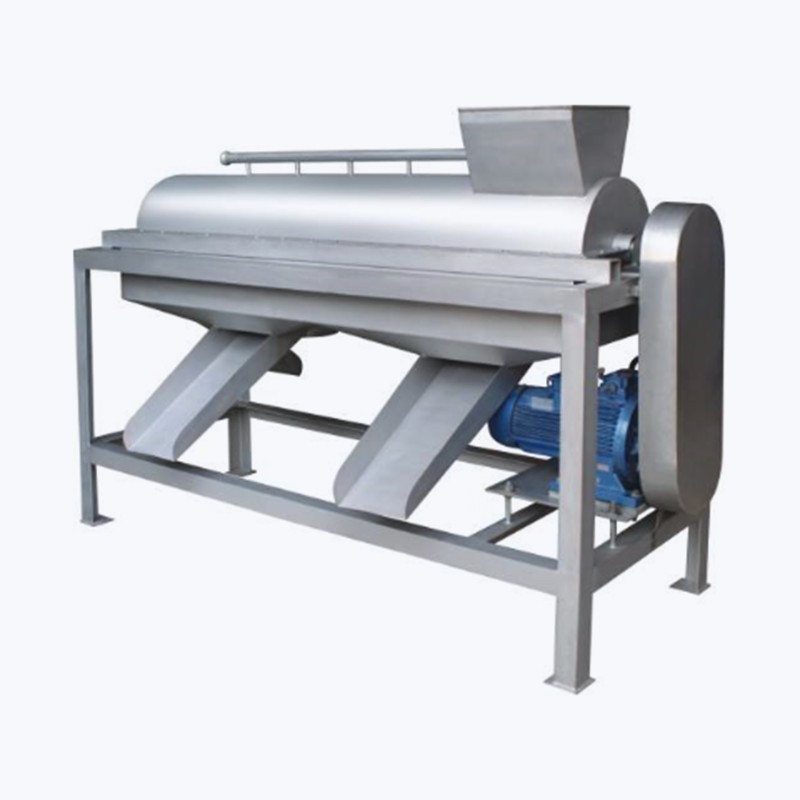
| 3. Destoning | Fruit destoner | Separates pits from flesh; screen and paddle geometry set for peach, apricot or plum. |
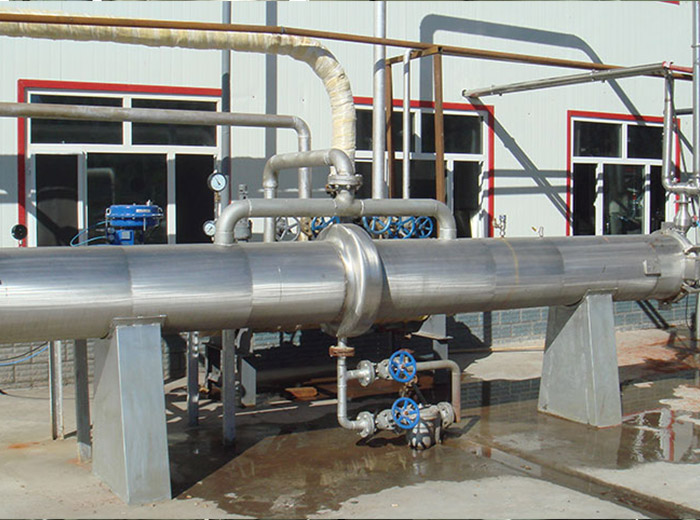
| 4. Preheating | Tubular preheater | Thermal treatment deactivates pectinase and limits enzymatic browning before pulping. |
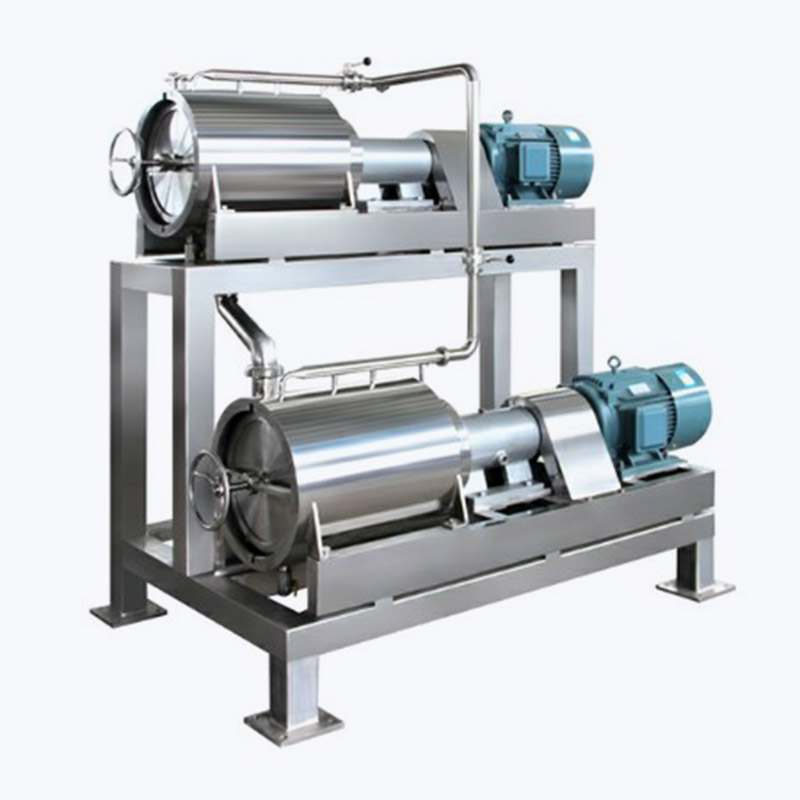
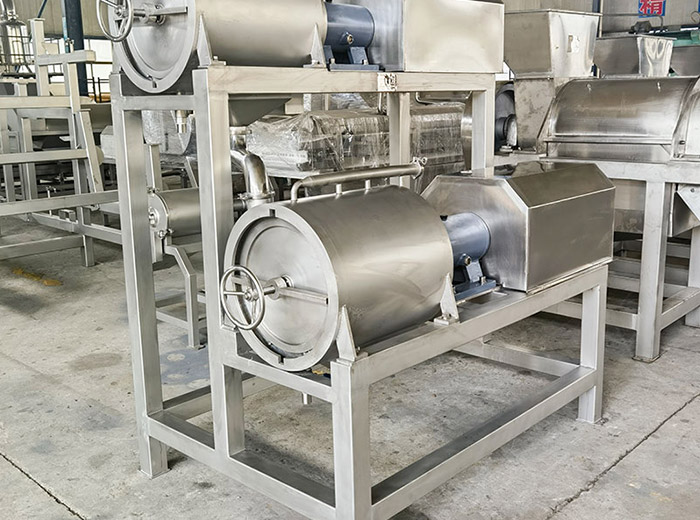
| 5. Pulping | Fruit pulper & finisher | Extracts pulp and refines texture; screen size controls fibre content and mouthfeel. |
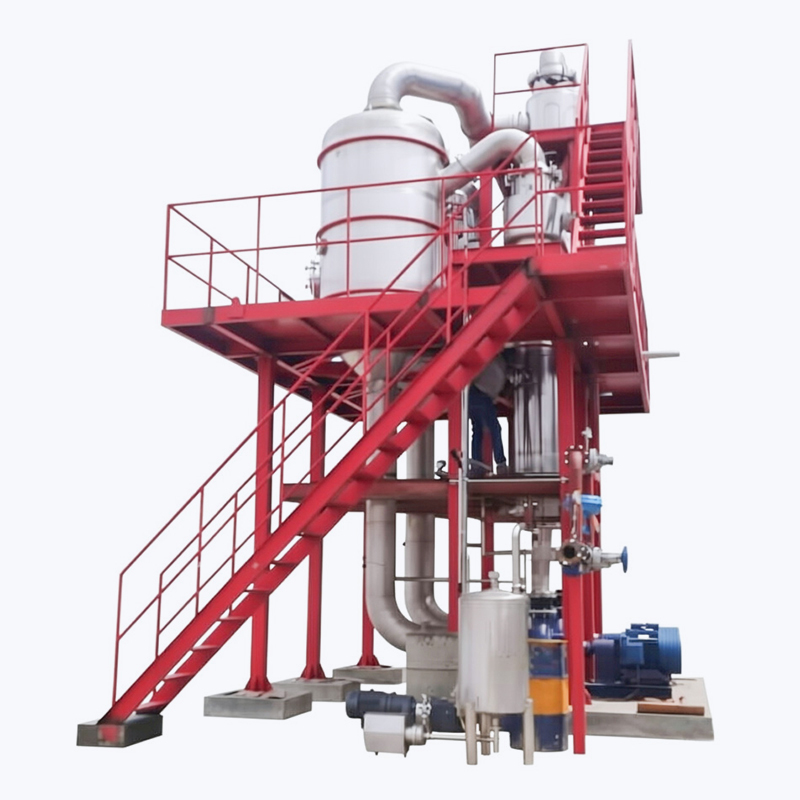
| 6. Concentration | Vacuum evaporator | Multi-effect low-temperature evaporation raises brix while protecting aroma and colour. |
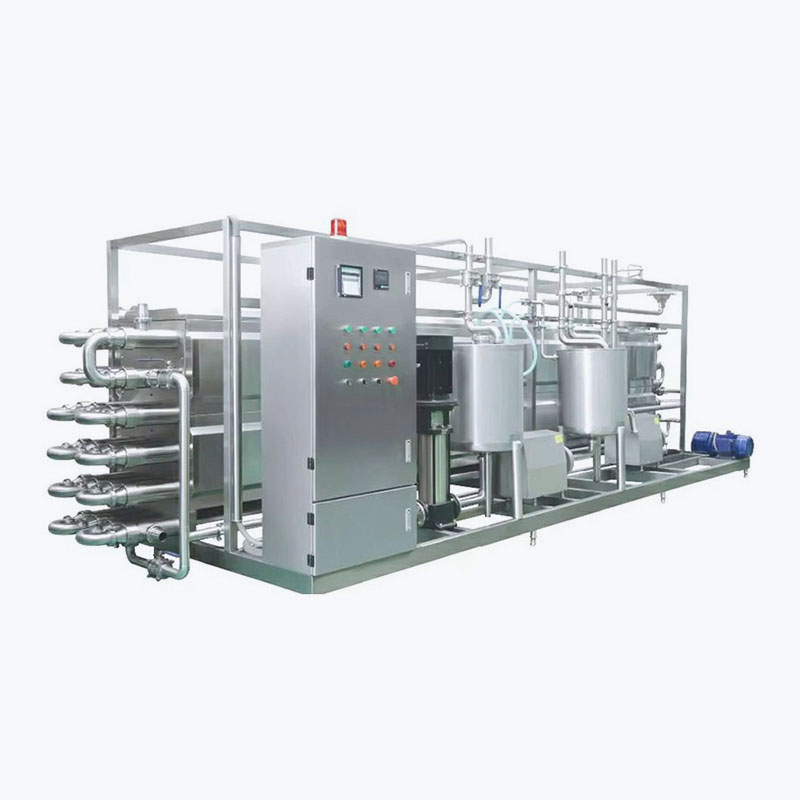
| 7. Sterilization | Tube in tube sterilizer | UHT short-time treatment with heat regeneration between hot product and incoming product. |
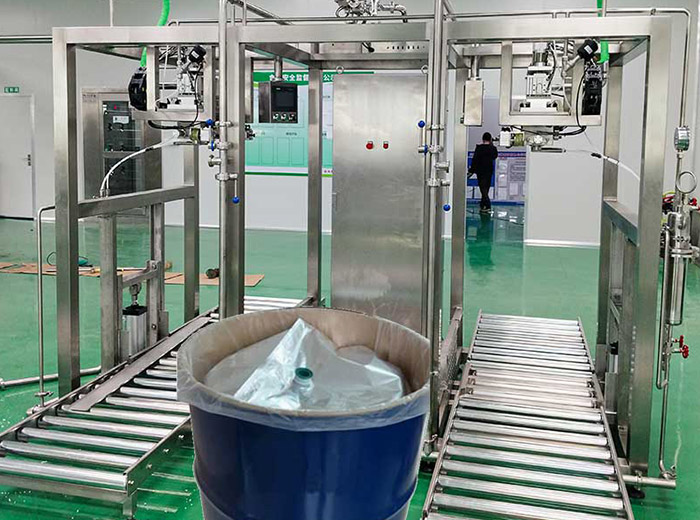
| 8. Aseptic filling | Aseptic BID filler | Fills sterilized puree into 5–220 L or 1000 L aseptic bags under a protected sterile zone. |
We supply the line as a turnkey package or as individual key machines for plants that already own part of the process. The table below shows how the main configurations differ.
| Configuration | Typical Intake | Final Product | Pack Format |
|---|---|---|---|
| NFC puree line | 2–25 t/h | Single-strength puree, 8–14 °Brix | Aseptic bag in drum |
| Concentrated puree line | 5–25 t/h | Concentrate up to 28–30 °Brix | Aseptic bag in drum, 1000 L bin |
| Pulp-only line | 2–10 t/h | Coarse or fine pulp for dairy and bakery | Aseptic BIB or hot fill |
| Multi-fruit combined line | 2–25 t/h | Peach, apricot, plum and other stone fruit | Shared aseptic filling station |
Where local fruit supply is seasonal and varied, we design multi-fruit combined lines so the same destoner, pulper and evaporator serve peach, apricot and plum campaigns. Changeover is handled through screen and paddle changes plus recipe settings in the PLC, which raises annual equipment utilisation without duplicating capital.
The line runs on a PLC control system with main electrical components from SIEMENS, SCHNEIDER or equivalent international brands. Recipes for different fruits and product grades are stored in the controller, so operators recall a setpoint group rather than re-entering temperatures and speeds at each campaign.
We configure the control architecture around the interfaces that already exist in your plant: CIP supply and return, chilled water, steam pressure, compressed air and the connection point to existing upstream or downstream equipment. Where a line is added to an existing factory, we map the new instruments into the customer's SCADA or DCS rather than imposing a separate supervisory layer.
We apply full-process quality management from incoming material to dispatch. Every machine completes a trial run and water commissioning before delivery, so mechanical alignment, rotation direction, seal tightness and control logic are proven before the equipment leaves the workshop.
At site, acceptance follows a documented sequence: mechanical completion, water test, product run, sterilization validation and aseptic filling trial. Bag integrity, fill weight and microbiological results from the first production batches form the handover record. Our engineers remain on site after commissioning to support the first production runs.
Destoner screens, pulper paddles and finisher screens are wear items, so we design access around them: quick-release covers, accessible bearings and clearly identified lubrication points. Spare parts for these components are supplied with the line and can be reordered as a kit.
Our service scope covers spare parts replacement, scheduled inspection, remote diagnosis of control faults and modernisation of older equipment. Annual pre-season visits allow inspection and maintenance before the fruit campaign begins, which is when unplanned downtime is most expensive.
The same engineering approach is applied across our fruit and vegetable processing range, so a plant producing several products can share utilities, CIP and filling infrastructure.
A proposal is prepared from the following project inputs. Where data is not yet fixed, we work with ranges and confirm the design basis before manufacturing begins.
Our standard range runs from 2 to 25 t/h of fresh fruit input. Smaller pilot and laboratory configurations are available for product development, and larger industrial lines can be engineered for higher intake where site conditions allow.
Yes. We design multi-fruit combined lines with interchangeable destoner screens and pulper paddles, plus separate PLC recipes for each fruit. This suits regions where several stone fruits ripen in sequence and the plant needs to keep the line loaded across the campaign.
Concentration takes place under vacuum at low temperature in a multi-effect evaporator, and sterilization uses a tube-in-tube UHT system with short residence time. Piping is laid out to keep temperature changes short in distance and time, limiting aroma loss and browning.
Aseptic bag-in-drum filling covers 5 L to 220 L bags, and 1000 L bins are available for bulk concentrate. Bag-in-box filling is offered where smaller retail or food-service formats are required.
We provide on-site installation guidance, commissioning, operator training and maintenance instruction. After handover, our engineers can stay on site for initial production, and we carry out annual pre-season inspections with spare parts supply and remote fault diagnosis.

Copyright © Sunshine Machinery (Shanghai) Co., Ltd. All Rights Reserved Peach Puree Processing Line Suppliers