


 English
 русский
 Español
 عربى
 Français
How Do You Choose the Right Tomato Paste Processing Line?
Content
How to Choose a Tomato Paste Processing Line for Your Plant
Tomato paste is one of the most traded processed fruit and vegetable products, and the equipment behind it decides yield, color, viscosity and shelf life. For a processor planning a new plant or upgrading an old one, the question is rarely about a single machine. It is about how every step, from the first wash to the final bag, works together. A complete tomato paste processing line is built around that idea.
Start with capacity and raw material
Hourly capacity should be set by the harvest window, not by average demand. Tomato seasons are short, so a line sized too small leaves fruit waiting in the yard. Industrial lines usually run from a few tons to several dozen tons of fresh fruit per hour, and smaller mini or pilot lines suit new product development. Fruit variety, soluble solids and the target brix of the finished paste all feed into the design.
Front end: cleaning, crushing and enzyme control
Clean fruit protects everything downstream. A fruit washer, sorter and lifter removes soil and lets staff pick out damaged tomatoes before they reach the crusher. After that, a fruit crusher and a tomato crushing pump reduce the fruit to a pumpable mash. The mash then goes to a preheater / scalder, where hot break or cold break treatment controls pectin enzymes and therefore paste viscosity.
Pulping, evaporation and sterilization
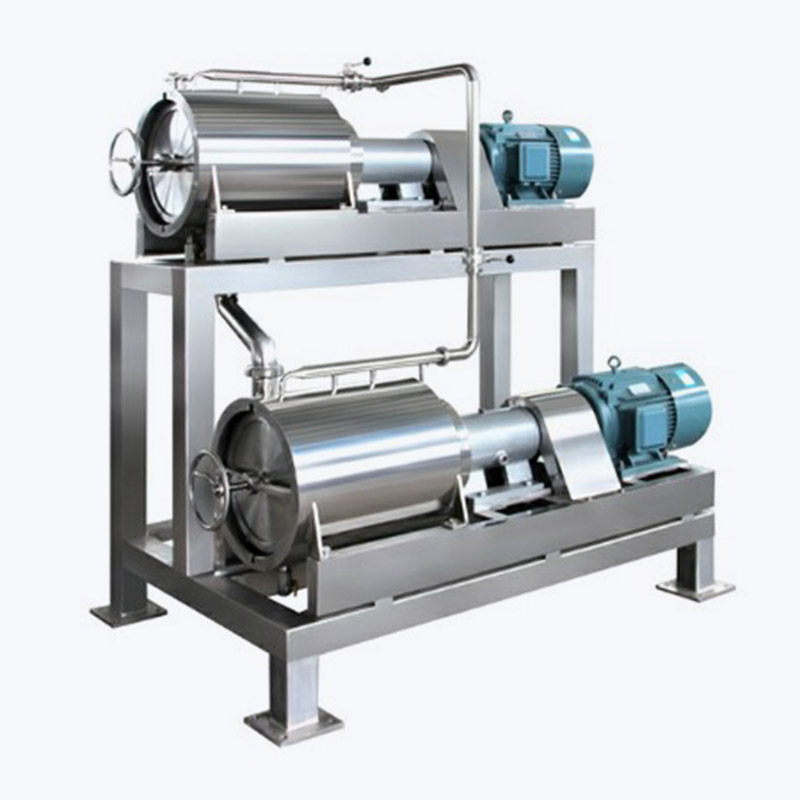
Seeds and skins are separated in a fruit pulper and finisher, and a fruit refining machine can polish the juice further when a smoother texture is required. Concentration is the biggest energy user in the plant. Two evaporator types are common:
- Falling film vacuum evaporator: gentle on heat-sensitive material and efficient for lower-viscosity feed.
- Forced external circulation vacuum evaporator: better suited to high-viscosity paste at the final concentration stage.
After concentration, the paste is heat treated in a tube in tube sterilizer and packed under aseptic conditions, for example with an aseptic BID (bag in drum) filler for bulk drums.
Questions to ask a supplier
- Is the line designed around your fruit and finished-paste specification, or is it a standard layout?
- How much steam and cooling water does the evaporation stage use per ton of paste?
- Can the line be expanded later without rebuilding the front end?
- Does the supplier handle installation, commissioning and operator training?
Sunshine Machinery (Shanghai) Co., Ltd. designs and supplies complete fruit and vegetable lines. Send us your capacity and product requirements for a tailored proposal.


QUICK LINK
CONTACT US
- ADDRESS : No. 900, Lanfeng Road, Fengxian District, Shanghai, China
- TEL./WHATSAPP : +86 18301859083
- EMAIL : jerry@shsunshineco.com huxg2002@163.com
MOBILE TERMINAL
Copyright © Sunshine Machinery (Shanghai) Co., Ltd. All Rights Reserved OEM Customized Fruit Processing Line Turnkey Solution
