


 English
 русский
 Español
 عربى
 Français
Ketchup Production: Tomato Paste Processing, Blending and Aseptic Filling
Content
- 1 Ketchup Production Starts With the Tomato, Not the Bottle
- 2 From Field to Drum: Turning Tomatoes Into Paste
- 3 Formulating Ketchup: Mixing, Homogenizing and Heat Treatment
- 4 Filling Ketchup: Bottles, Pouches and Bag-in-Box
- 5 The Stages of Ketchup Production at a Glance
- 6 Quality Checks That Keep Every Batch Consistent
- 7 Matching Equipment Scale to Your Ketchup Business
- 8 Common Questions From Ketchup Producers
Ketchup production looks simple on a label: tomatoes, vinegar, sugar, salt and spice. On the plant floor it is a chain of carefully tuned steps, and every one of them decides how the next will behave — the colour of the paste, the body of the sauce, and whether the product still tastes right after eighteen months on a shelf. Our engineers have spent decades building and commissioning these lines, and this is the way we usually explain the process to people who arrive with a product idea, a plot of land and a harvest calendar.
Ketchup Production Starts With the Tomato, Not the Bottle
Two routes lead to the same sauce. In the first, fresh tomatoes arrive by the truckload during harvest and move straight through washing, crushing, hot break and evaporation into a concentrated paste, which is then blended into ketchup. In the second, a factory buys remelted tomato paste in drums and begins at the blending stage. Large ketchup plants tend to choose the first route because it gives them control over colour, viscosity and cost. Smaller or year-round operations often choose the second.
Everything downstream of the paste is essentially the same, which is why we describe ketchup production as a tomato paste process followed by a sauce process. Understanding both halves makes it much easier to specify equipment, plan a building and predict where a bottleneck will appear once the line is running.
From Field to Drum: Turning Tomatoes Into Paste
Washing, sorting and crushing
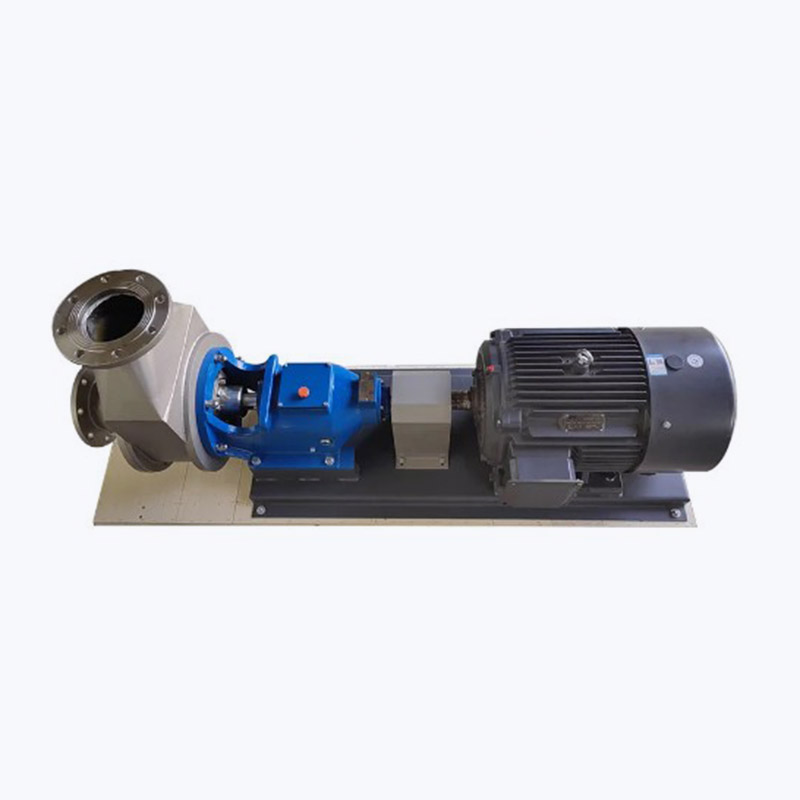
Tomatoes come in with soil, stems, leaves and the occasional green fruit. A washer, sorter and lifter removes field debris and gives operators a place to pull out defects before anything is broken open. From there, a crusher — or a tomato crushing pump on a dedicated paste line — breaks the fruit gently enough that the seeds stay whole and bitterness stays out of the paste.
Hot break and cold break
The crushed tomatoes are heated quickly, usually into the 85–95 °C range, to deactivate the pectin-destroying enzymes. Producers who want thick, high-viscosity paste use a hot break and accept a slightly darker colour. Producers chasing a brighter red and a lower energy bill use a cold break and accept a thinner product, then correct the body later with evaporation and formulation. That decision, made in a few seconds at the front of the plant, is still visible in the ketchup a year later.
Pulping, refining and finishing
Pulpers and finishers separate skin and seeds from the juice, and refining machines tighten the particle size so the paste feels smooth on the tongue. Screens and rotor clearances are worth checking daily; a small change here shows up as grit in the finished sauce.
Evaporation
Evaporators concentrate the juice from roughly 5 °Brix to 28–30 °Brix, and higher for double concentrate. Falling film units suit the early, thinner stages, while forced external circulation evaporators handle the viscous end of the run. Multi-effect designs reuse vapour from one effect to heat the next, which is where most of the steam saving in a paste plant comes from.
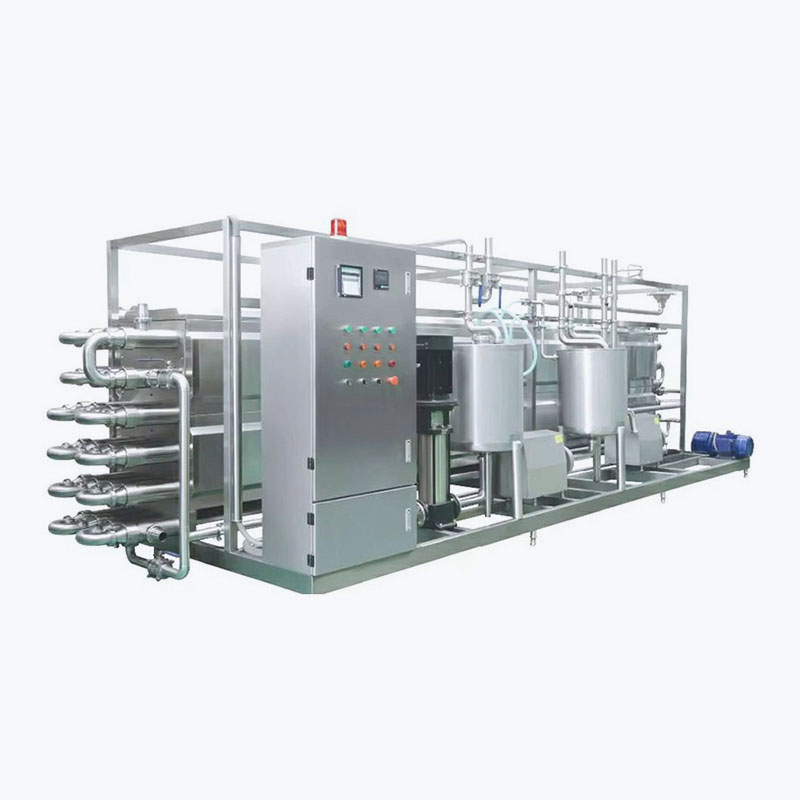
 Tomato Paste Processing Line from Fruit Receiving to Aseptic FillingComplete system covers washing, sorting, evaporation, sterilization and aseptic filling for tomato paste and other fruit concentrates, with scalable capacities.View Product →
Formulating Ketchup: Mixing, Homogenizing and Heat Treatment
Paste is only half the story. Sugar, salt, vinegar, spice extracts, onion and garlic powders, and often a small dose of starch or gum go into a blending tank under controlled agitation and temperature. Order of addition matters: salt and vinegar shift the pH and the viscosity, so a recipe that is dumped in all at once will behave differently from one added in stages.
Homogenization
Passing the blend through a homogenizer breaks down particles and stops the separation that otherwise appears as a watery ring around the neck of a bottle. Pressure and temperature here are the two settings most often adjusted when a customer wants a thicker or a glossier sauce.
Sterilization and pasteurization
Ketchup is a viscous, acidic product, so tubular heat exchangers are usually a better fit than plates. A tube-in-tube sterilizer handles the higher solids and fibres without clogging, and a holding tube gives the product the residence time it needs before cooling. For drink-style or lower-viscosity sauces, a tubular UHT pasteurizer does the same job with tighter temperature control.
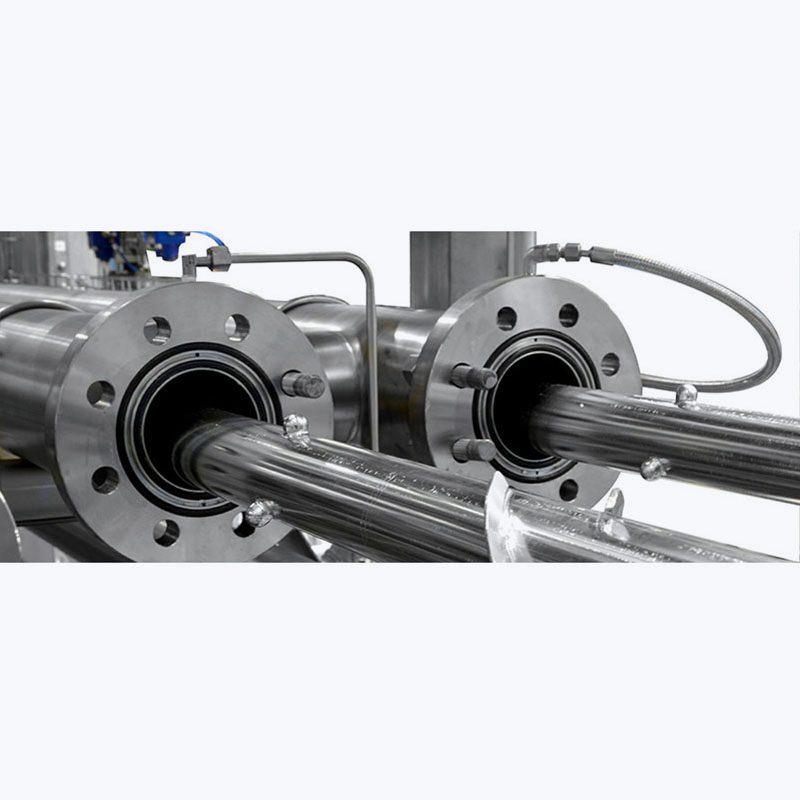 Tube-in-Tube Sterilizer for Viscous Fruit and Sauce ProductsDesigned for pastes, purees, juices and sauces, with adjustable sterilization and holding times and PLC control for aseptic filling.View Product →
Filling Ketchup: Bottles, Pouches and Bag-in-Box
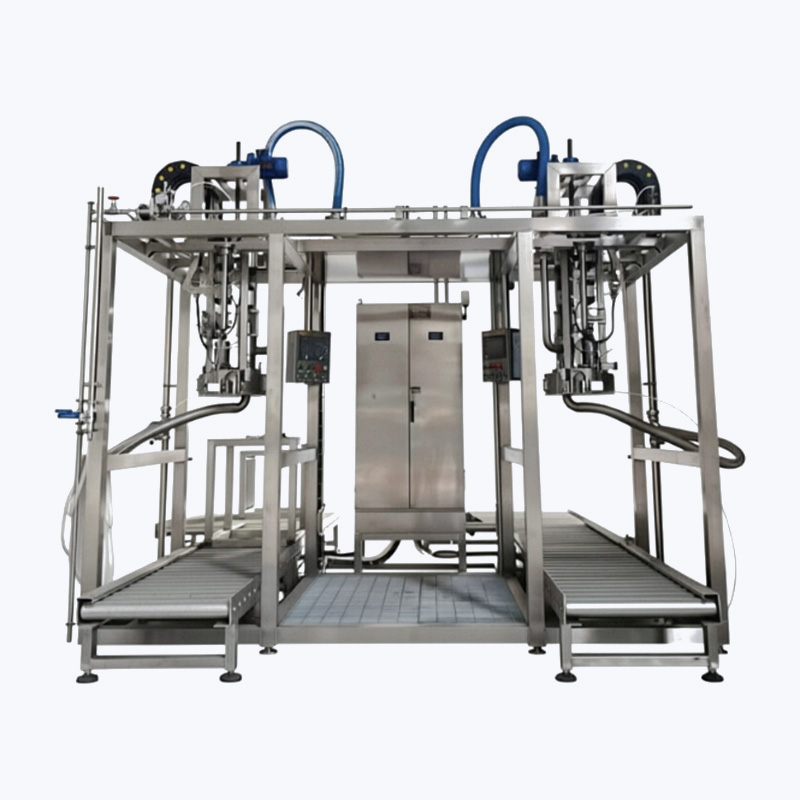
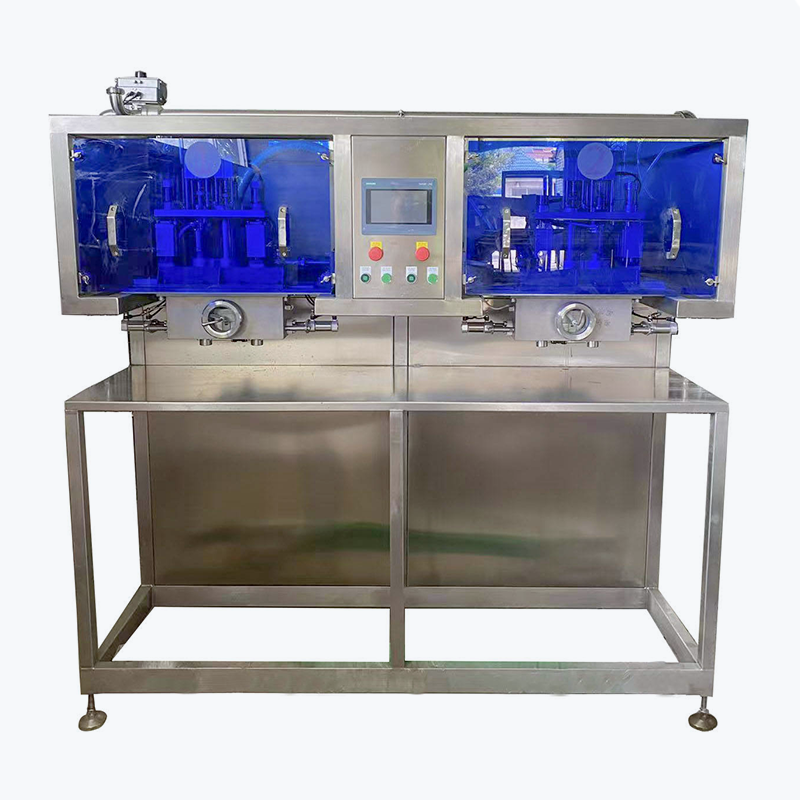
The last stage decides shelf life as much as the first. Glass and PET bottles are usually hot filled in the 85–92 °C range, then inverted briefly so the hot product sanitizes the cap and headspace. Sachets and pouches follow a similar hot-fill logic with dedicated fillers. For foodservice and industrial customers, bag-in-box is increasingly common because it cuts packaging weight and keeps the sauce from oxidizing between servings; aseptic filling extends ambient storage even further and removes the need for a cold chain.
Whichever format you choose, the filler, the cap sterilizer and the downstream cooling tunnel have to be sized together. A filler running faster than the cooler can handle simply moves the queue from the filling hall to the palletizing area.
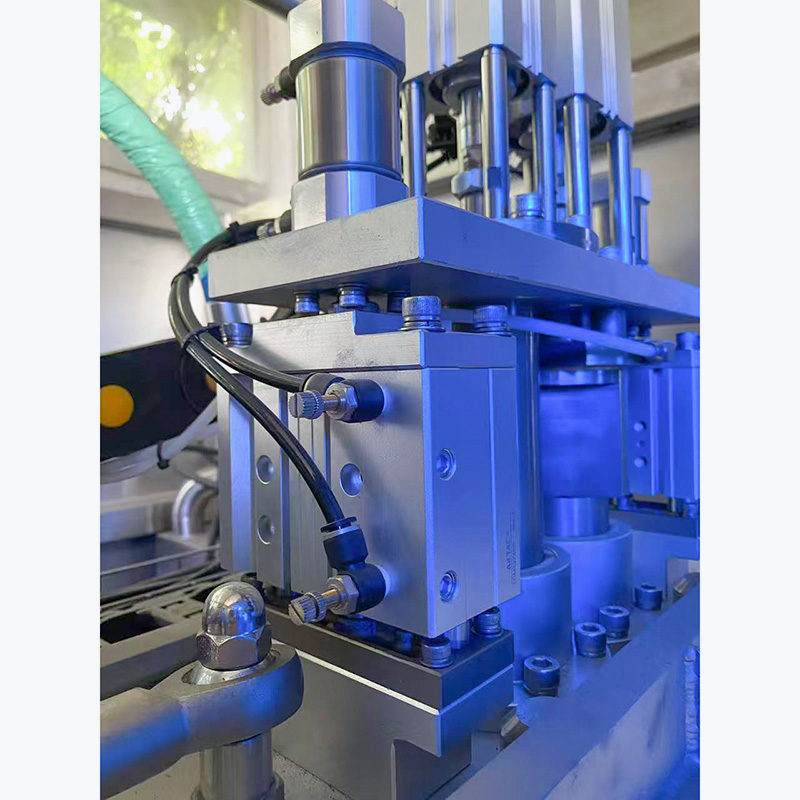 Aseptic Bag-in-Box Filler for Pastes and JuicesFills 1–30 L aseptic bags with automatic lid removal, metering and sealing, suited to pastes, concentrates, syrups and dairy products.View Product →
The Stages of Ketchup Production at a Glance
The table below is the version we sketch on a whiteboard during the first technical meeting. It is deliberately simple, because most project decisions come down to how much of each stage a customer wants to own.
| Stage | Typical equipment | What operators watch |
|---|---|---|
| Receiving and washing | Washer, sorter, lifter | Debris load, fruit defects, water use |
| Crushing and hot break | Crusher, preheater or scalder | Break temperature, holding time |
| Pulping and refining | Pulper and finisher, refining machine | Screen condition, particle size |
| Concentration | Falling film or forced circulation evaporator | °Brix, aroma recovery, steam economy |
| Blending | Agitated mixing tanks | Recipe order, pH, soluble solids |
| Homogenization | Homogenizer | Pressure, temperature, gloss |
| Sterilization | Tube-in-tube sterilizer or tubular UHT | Holding time, outlet temperature |
| Filling | Hot-fill or aseptic BIB/BID filler | Fill weight, seal integrity, headspace |
Quality Checks That Keep Every Batch Consistent
Ketchup is judged by the spoon as much as by the laboratory, so the checks that matter most combine instrument readings with sensory ones:
- Total soluble solids, measured in °Brix, to confirm the concentration step and the recipe both landed where they should.
- Consistency by Bostwick or a similar flow test, since a sauce that pours too fast will look thin on the shelf.
- pH and titratable acidity, which protect both flavour balance and microbiological stability.
- Colour, tracked as a and b values, to catch overheating in the evaporator or the sterilizer before a whole shift is lost.
- Seal and package integrity, checked by sampling filled units rather than by trusting the machine settings.
Sampling frequency should rise whenever the raw material changes. A new delivery of paste, a wetter harvest or a different vinegar supplier will all move the numbers, and the faster the lab reports, the faster the blender can correct.
Matching Equipment Scale to Your Ketchup Business
One of the questions we hear most often is whether to start small and expand, or to build the full line at once. There is no universal answer. A pilot or laboratory system lets you test recipes and sell samples to buyers before committing capital, and its vessels and heat exchangers can later serve as a small commercial line. A full turnkey plant, on the other hand, spreads the fixed cost of utilities and buildings across a much larger output and usually pays back faster once the volume is sold.
If ketchup is one product among several, it is worth thinking about how the same fruit and vegetable processing lines can be shared with purees, juices and sauces that run in a different season. Many of our customers in Asia, Africa and South America use the same washing, crushing and evaporation train for tomato paste, mango puree and guava concentrate, changing only the finishing and filling sections.
Practical constraints deserve an early look too: steam and cooling water capacity, wastewater from washing, the space needed for drum storage, and how the paste will be transported if it is produced elsewhere. If you are still comparing configurations, this discussion of choosing the right tomato paste processing line walks through the trade-offs in more detail.
Common Questions From Ketchup Producers
Is it better to buy paste or make it?
Making paste yourself gives control over colour and viscosity and lowers raw material cost during harvest, but it ties capital to a short season. Buying remelted paste keeps the plant running year-round at a higher per-kilogram price. Many successful plants do both and treat the paste line as a seasonal asset.
Why does ketchup sometimes turn dark?
Usually prolonged heating or dissolved oxygen. Shortening the holding time in the sterilizer, cooling faster after hot fill and minimizing splashing in the blending tank all help preserve the red.
How much capacity do we need?
Start from the annual volume you can sell, divide by the number of production days, and add a realistic changeover allowance. It is always cheaper to add a second filling head than to rebuild an evaporator.
Ketchup production rewards plants that treat it as a continuous process rather than a collection of machines. When the break temperature, the evaporation curve, the recipe order and the fill temperature are all in step, the sauce stays consistent for the whole season. If you are planning a new line, upgrading an old one, or simply trying to work out why one batch in twenty tastes different from the rest, our engineers are glad to look at your process with you — most conversations start with a drawing, some numbers and a few honest questions.



QUICK LINK
CONTACT US
- ADDRESS : No. 900, Lanfeng Road, Fengxian District, Shanghai, China
- TEL./WHATSAPP : +86 18301859083
- EMAIL : jerry@shsunshineco.com huxg2002@163.com
MOBILE TERMINAL
Copyright © Sunshine Machinery (Shanghai) Co., Ltd. All Rights Reserved OEM Customized Fruit Processing Line Turnkey Solution
